Who looks after the Bayon
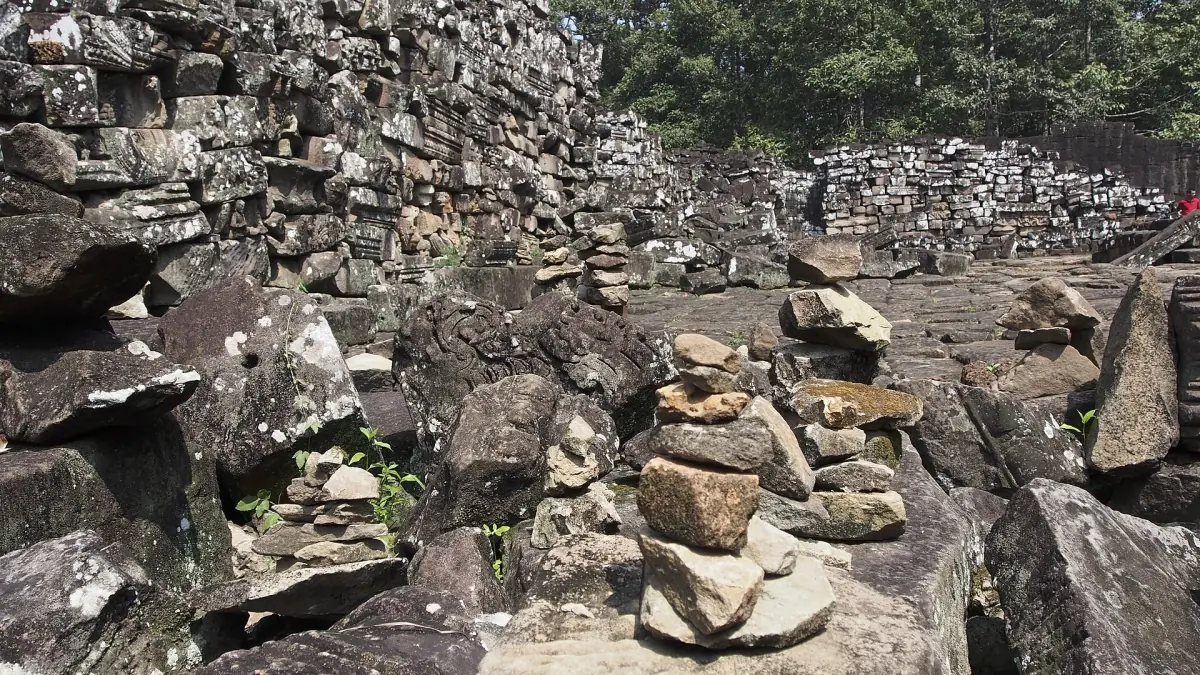
Two organisations stand behind most of the Bayon restoration and conservation work. The first is the APSARA National Authority, which manages the Angkor park. The second is a Japanese team, the Japanese Government Team for Safeguarding Angkor, known as JSA. It was founded in 1994 and works on research, restoration, technical training and the transfer of know-how to Cambodian specialists. A joint Japan and APSARA team is called JASA.
The Bayon is a state temple of King Jayavarman VII, built in the late 12th or early 13th century. Conservation here is slow, careful work that starts with research. If you want the story behind the stones, start with the history of the Bayon.
Bayon restoration: the principles
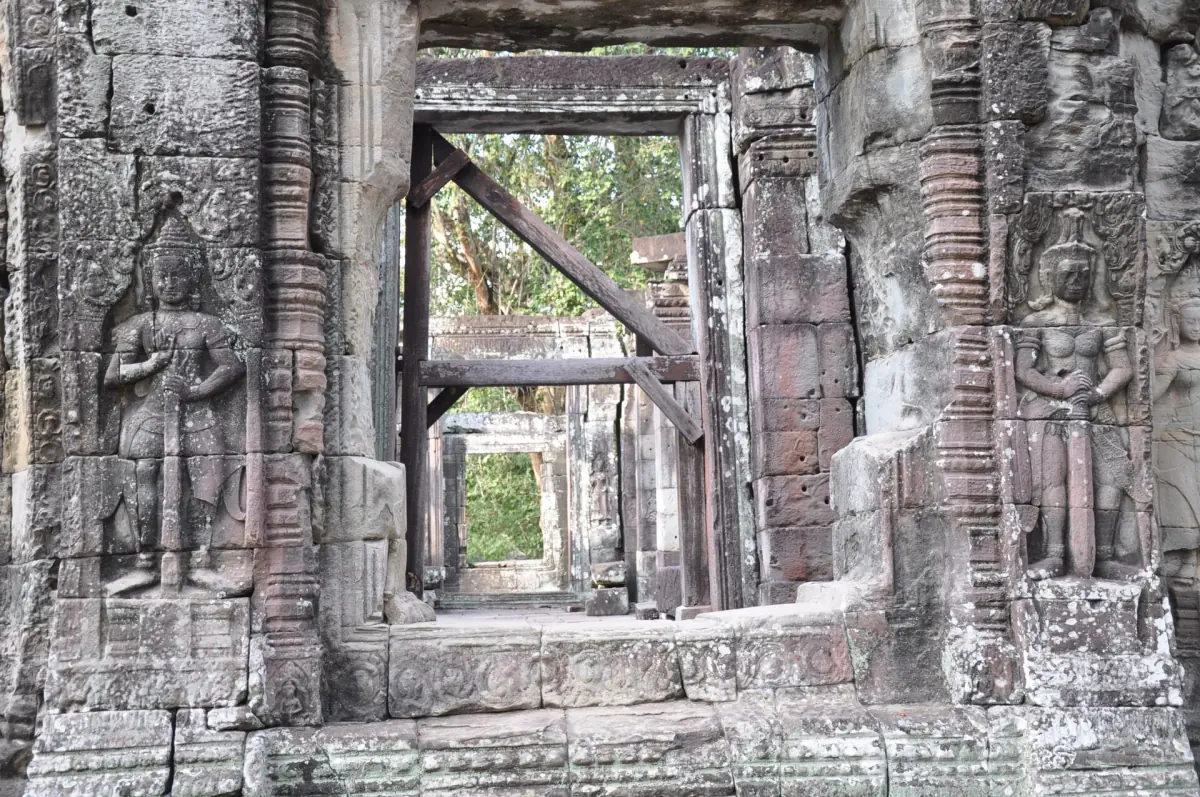
The Bayon Master Plan and the Bayon Charter have guided the work since June 2005.
Research first
Conservation is meant to rest on research. Study of the building comes before any decision about what to repair.
Keep the original material
The guideline is to preserve the original materials as far as possible. The aim is to protect the temple as it is, not to make it look new.
Train people
Technical training and the transfer of knowledge are part of the programme, so that specialists can carry the work forward.
Bayon tours with a guide
Guided visits to the Bayon, often combined with Angkor Wat and Ta Prohm, with live prices and availability. A guide can explain why parts of the temple look the way they do.
What has been worked on
A short timeline of the main fields of work.
| Part of the temple | Work | When |
|---|---|---|
| North Library and South Library | Conservation work | Earlier phases |
| East facade | Conservation work | Earlier phases |
| Central structure and inner gallery reliefs | Study and conservation | Later phases |
| South-west third terrace | Repairs of naga balustrades, beams and stone floors, completed | December 2024 |
| Gallery reliefs | New programme: research, training, handover of collected data | Started 2026 |
The repairs on the south-west third terrace are not the same as a reopening of the whole upper terrace with the face towers. Treat them as one finished job inside a much longer programme.
Why the care matters
Angkor covers about 400 square kilometres, including large areas of forest, and it has been a World Heritage Site since 1992. It was on the danger list from 1992 to 2004. The Bayon is one temple inside this landscape. Every visitor helps by staying on the paths and leaving stones where they are.
The 2026 programme
On 11 June 2026 the first steering committee of a new JASA programme met with representatives of APSARA, the Japanese embassy, UNESCO and Waseda University. Japan funds the programme through UNESCO with 900,000 USD. The focus is on the reliefs of the galleries: research on them, training of specialists, and handing over the collected data.
For visitors this is mostly news about the future, not a change at the gate. It is a research and training programme. It does not promise visible scaffolding, a particular open area or a tour of the works.
What you can expect to see
Conservation changes from year to year, so plan with flexibility.
Fences and signs
Barriers and signs can appear in places. Respect all barriers and never climb on loose stones.
The upper terrace
The upper terrace may be closed (as of July 2026), so check on site. Ask your guide or check the situation before you go.
Loose stones
Do not step on loose stones or move them.
The reliefs
The reliefs in the galleries are the subject of the new programme. Do not touch them. The bas-reliefs guide explains what the scenes show.
Plan your visit around the work
Where to go next.
Opening hours and visiting tips
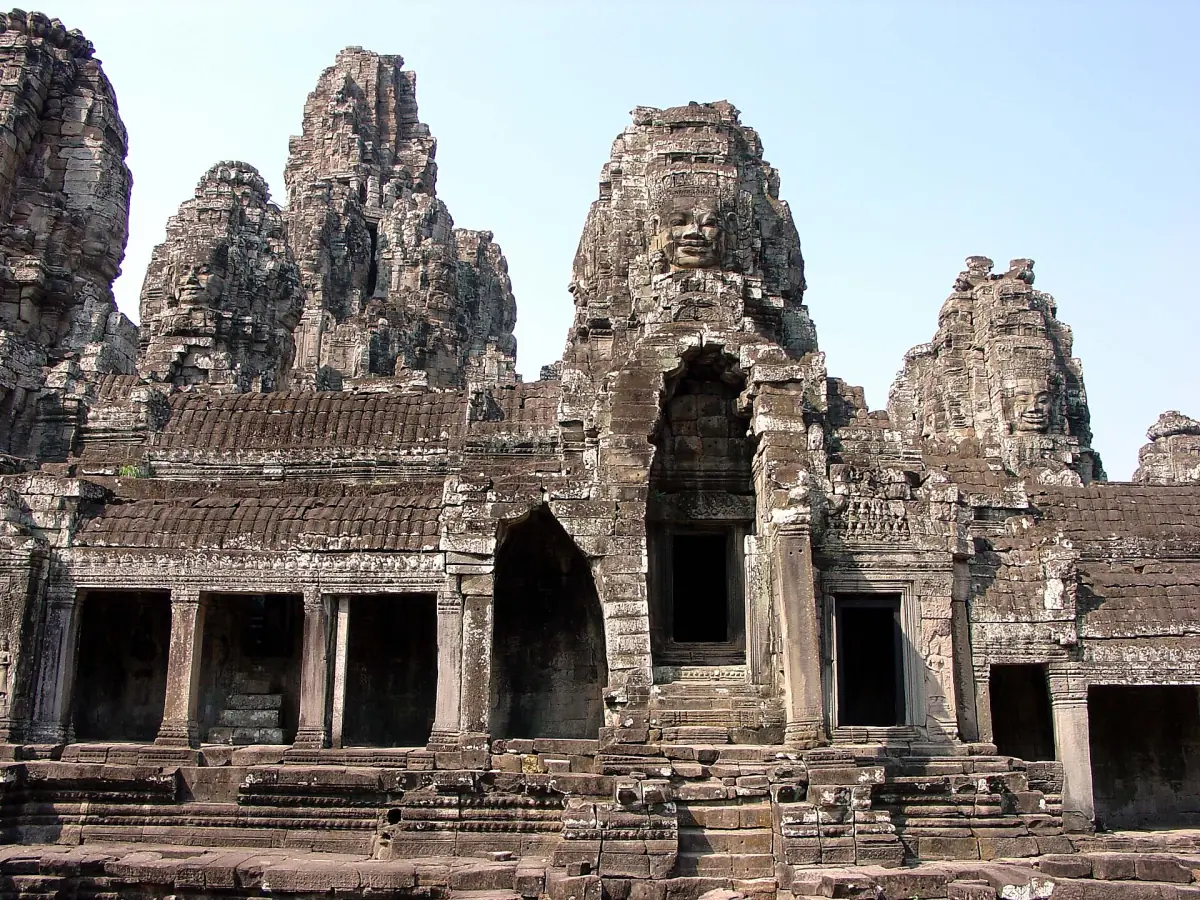
Hours, dress code and how to avoid the crowds.
The stone faces of the Bayon
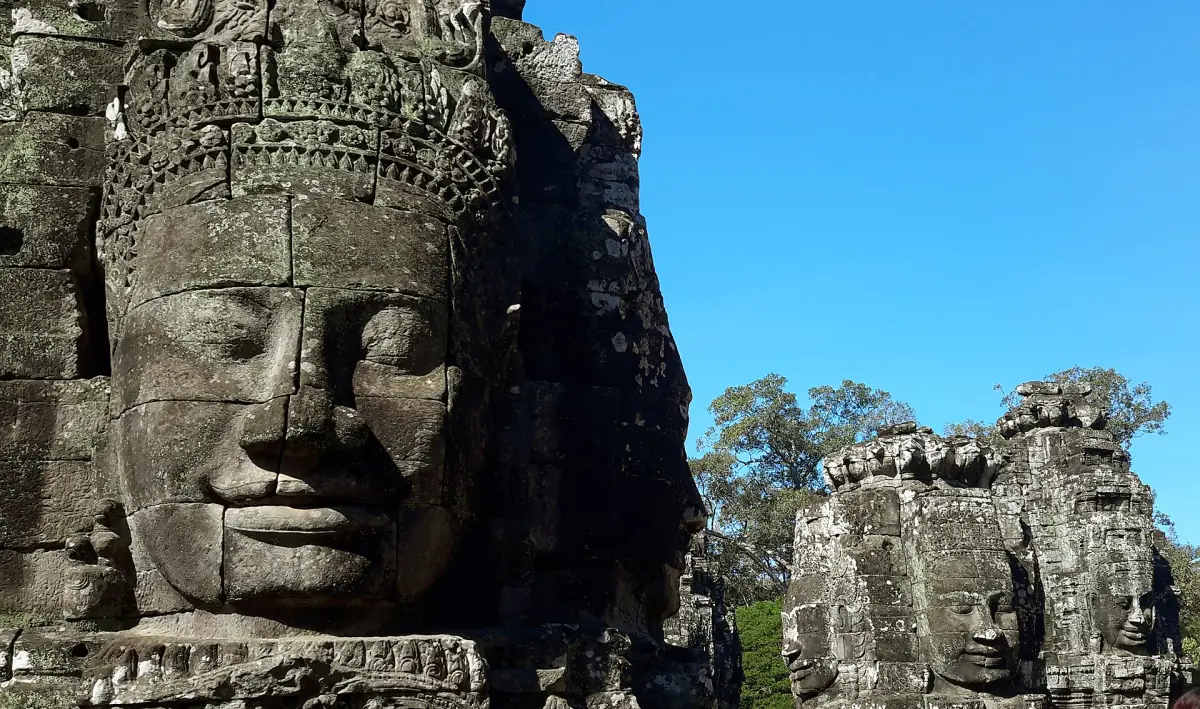
What the towers show and how people read them.
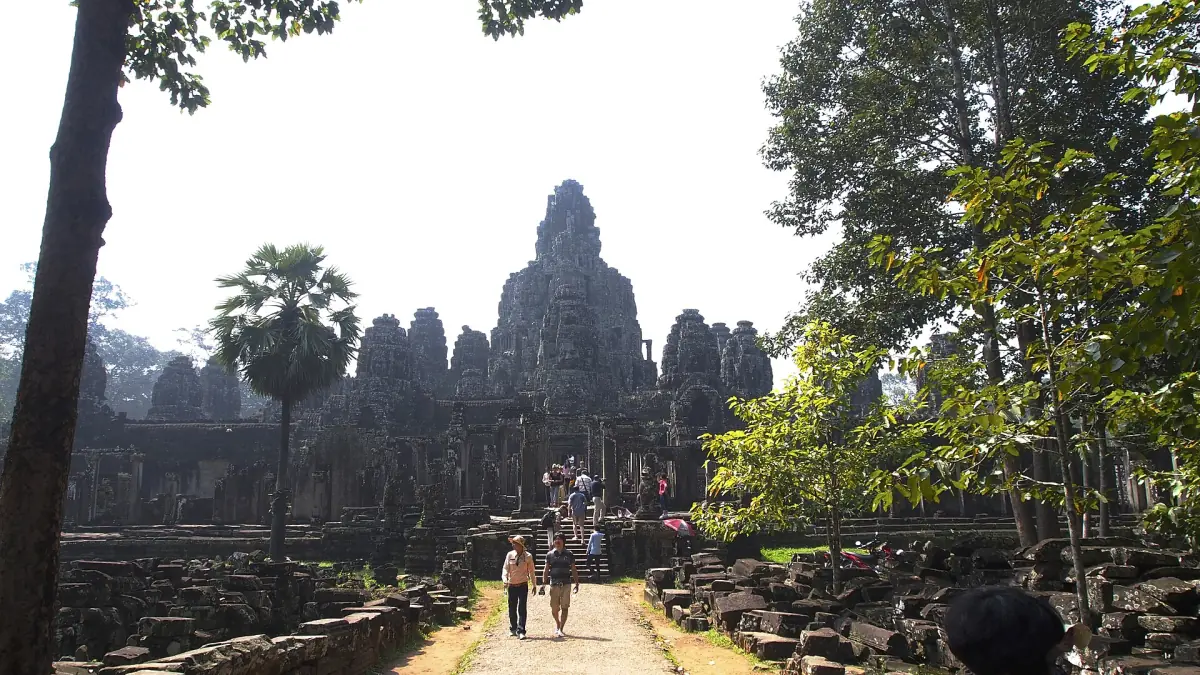
Best time to visit
Climate by month for Siem Reap.
The other buildings of the walled city, such as the gates and terraces, have their own guide at Angkor Thom.
Bayon restoration: frequently asked questions
Is the Bayon closed for restoration?
The temple is open to visitors. Under the Angkor Pass rules it is open from 7:30 a.m. to 5:30 p.m. Individual areas can be fenced off, so some views may be limited.
Can I climb to the upper terrace?
The upper terrace may be closed (as of July 2026), so check on site. The galleries and the lower levels still give you plenty of faces and reliefs.
Who pays for the restoration?
The current programme for the gallery reliefs is funded by Japan through UNESCO, with 900,000 USD. APSARA, the Japanese embassy, UNESCO and Waseda University took part in its first steering committee in June 2026.
What does JSA stand for?
JSA is the Japanese Government Team for Safeguarding Angkor. It was founded in 1994. A joint team with APSARA is called JASA.
Can I join a tour of the restoration work?
Do not count on visits to work areas. From the visitor paths a guide can explain what you see and why parts of the temple are supported or fenced.
What do the Bayon Master Plan and Charter say?
They have guided the work since June 2005: conservation should rest on research and keep the original material as far as possible.