Apsara dance and the Apsaras of the Bayon
Apsaras are celestial dancers. At the Bayon you meet them in stone: pillars in front of the eastern entrance show dancing Apsaras, often a group of three on lotus flowers, with smaller groups beside them. In Siem Reap you can meet them again on stage, in the form of Apsara dance, which draws on the images of the Angkor reliefs.
These are two different experiences, and it helps to keep them apart. The carvings are part of the temple and come with your Angkor Pass. The shows take place in town, not inside the Bayon, and are booked separately.
If you want to see the carvings with someone who can point them out, choose an Angkor Wat tour with the Bayon, then add a dance evening in town if you like.
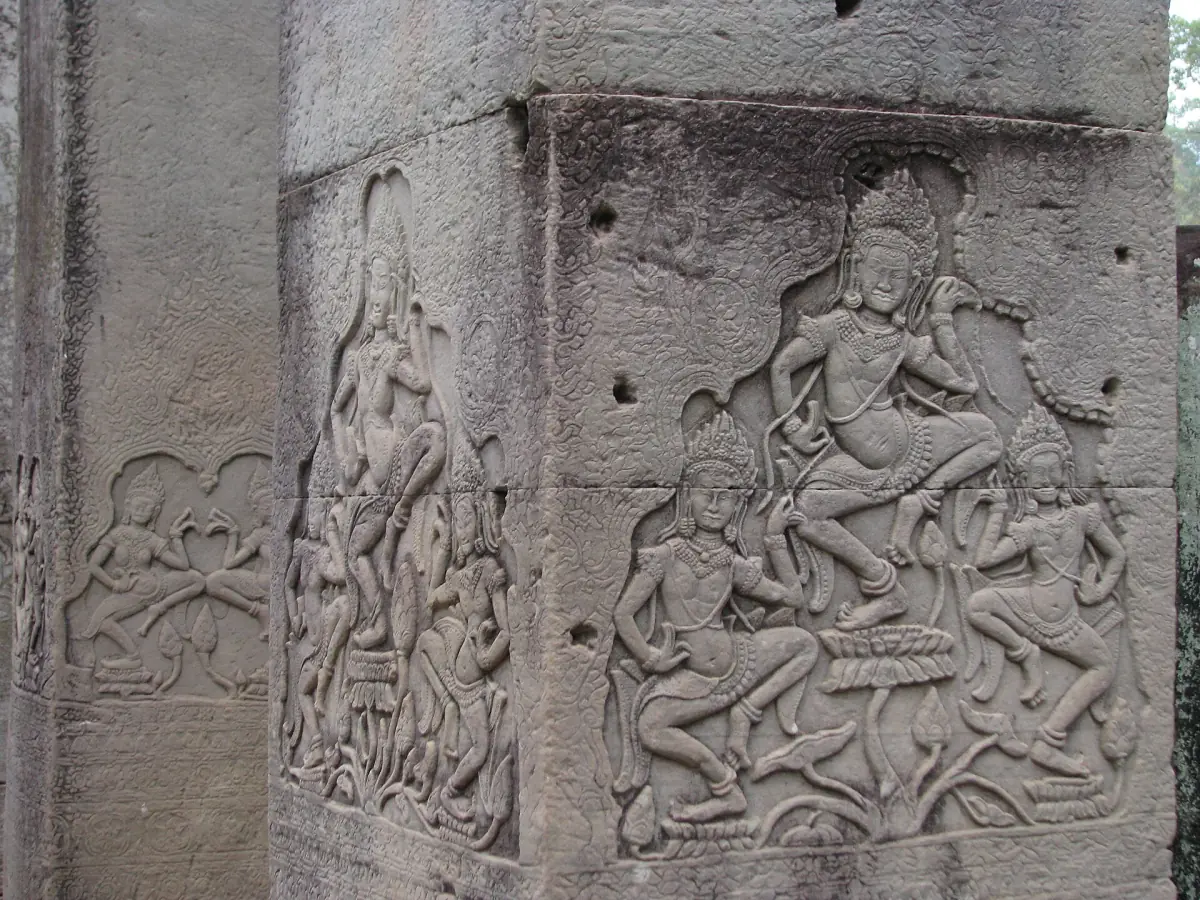
Apsaras in stone and on stage compared
Same figure, two ways to meet her.
| Apsaras at the Bayon | Apsara dance shows in Siem Reap | |
|---|---|---|
| Where | On pillars in front of the eastern entrance | On stages in town |
| What you see | Dancing figures carved in stone, often three on lotus flowers | Classical Apsara dance on stage |
| Cost | Included in the Angkor Pass, $37 for one day (2026) | Set by each show, so ask before you book |
| Time | Bayon open 7:30–17:30 | Check the current programme |
For most visitors, the simplest plan is to see the carved Apsaras in daylight at the Bayon and then pick one evening for a show. That way you know the figures when they appear on stage.
Our picks: Apsara dance shows
These are evening shows with dinner away from the temple, not performances at the Bayon. The first one adds a welcome dance, the second and third include a shared transfer from your hotel.
Hand-picked tours, booked through Viator. Prices are indicative starting prices in US dollars (as of October 2026). Tap a tour for live availability and the current price in your currency.
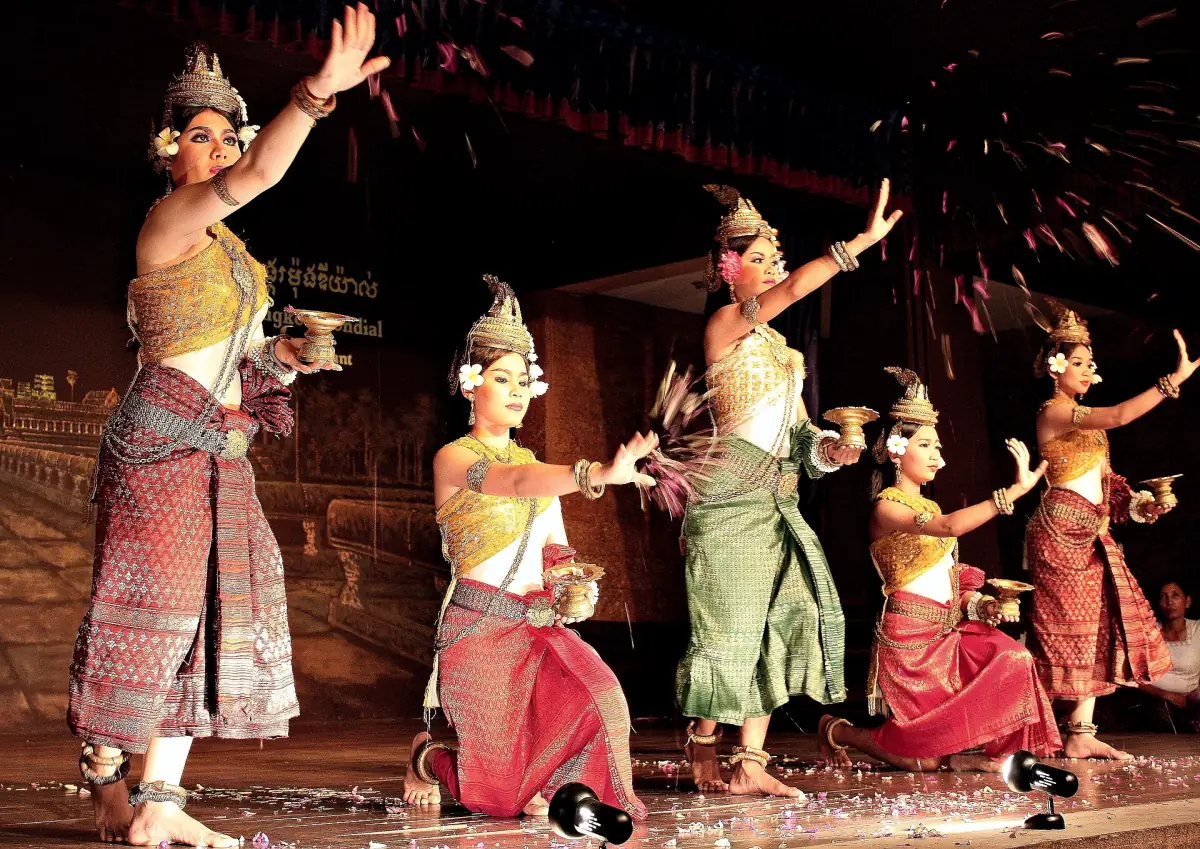
Apsara dance dinner show in Siem Reap
- Apsara dance show
- Dinner
- Welcome drinks
A traditional welcome dance opens the evening at the restaurant, followed by dinner and the Apsara show.
Check availability →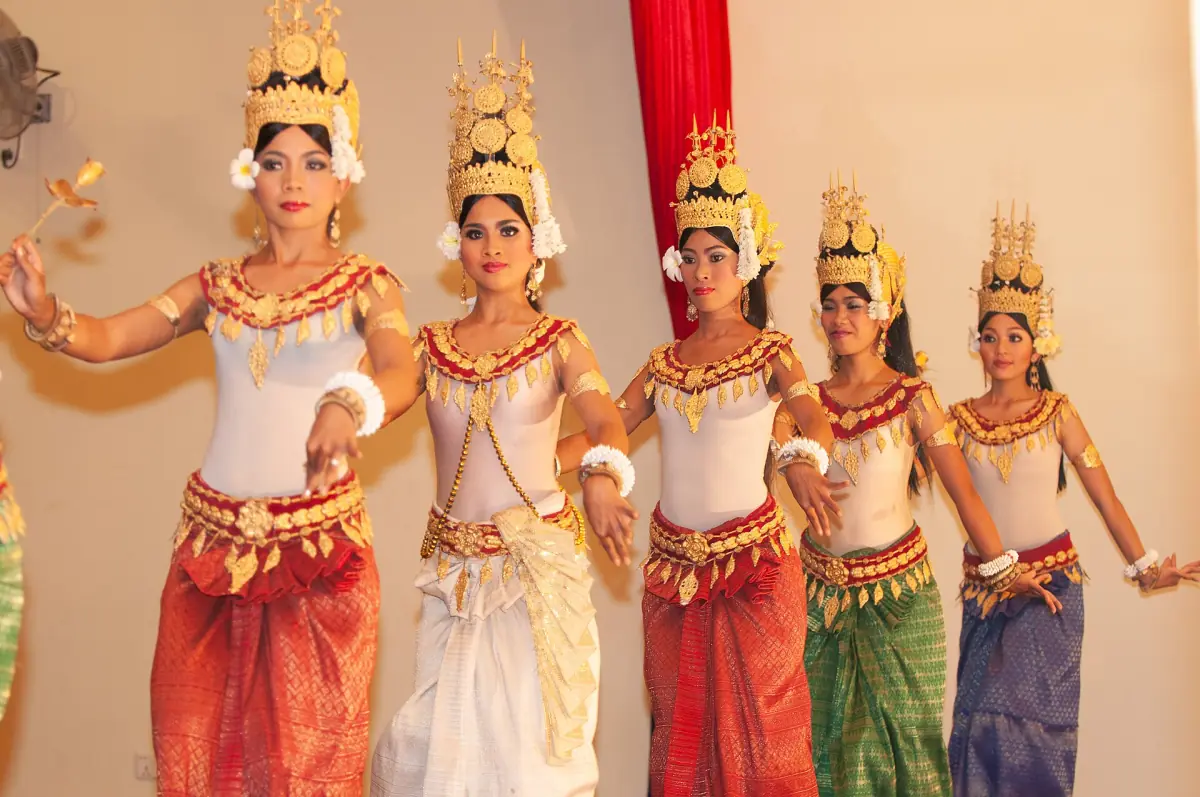
Apsara show with buffet dinner and hotel transfer
- Apsara show with buffet
- Hotel pickup and drop-off
- Shared tuk-tuk or minivan
Show and buffet dinner at one restaurant, reached on a shared round trip from your hotel. Check your ticket for the pickup or no-pickup option.
Check availability →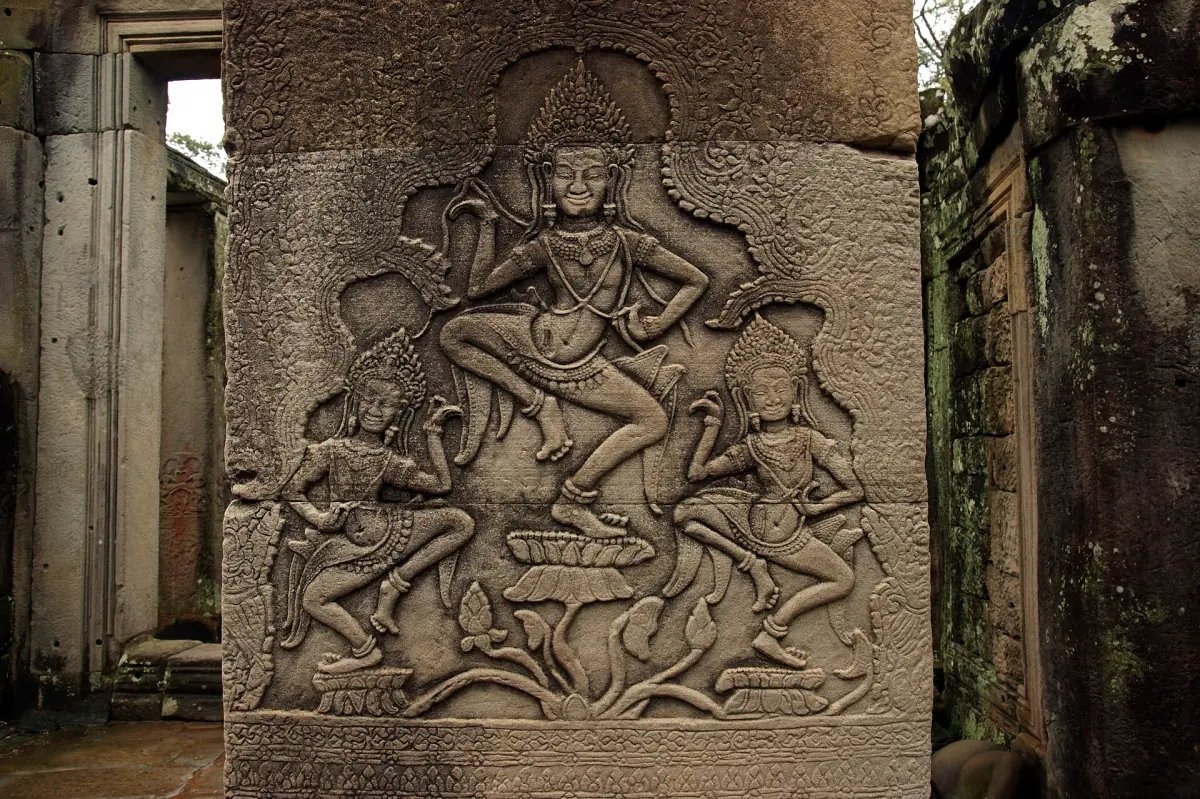
Shorter Apsara dinner show with hotel transfer
- Entry to the dance show
- Buffet dinner
- Shared round-trip transfer
A more compact evening than the other two, with the buffet dinner served at the venue.
Check availability →Siem Reap tours that include the Bayon
Half-day and full-day tours through Angkor Thom and the Bayon, with live prices and availability. Check the route before you book, and treat an Apsara dance show as a separate booking.
Where to find the Apsaras at the Bayon
Walk to the pillars in front of the eastern entrance and look closely at their surfaces. Some pillars show a trio on lotus flowers, a common grouping, and others show smaller groups.
Take your time and look closely, and do not touch the carvings. The visitor code asks everyone to keep their hands off carved surfaces.
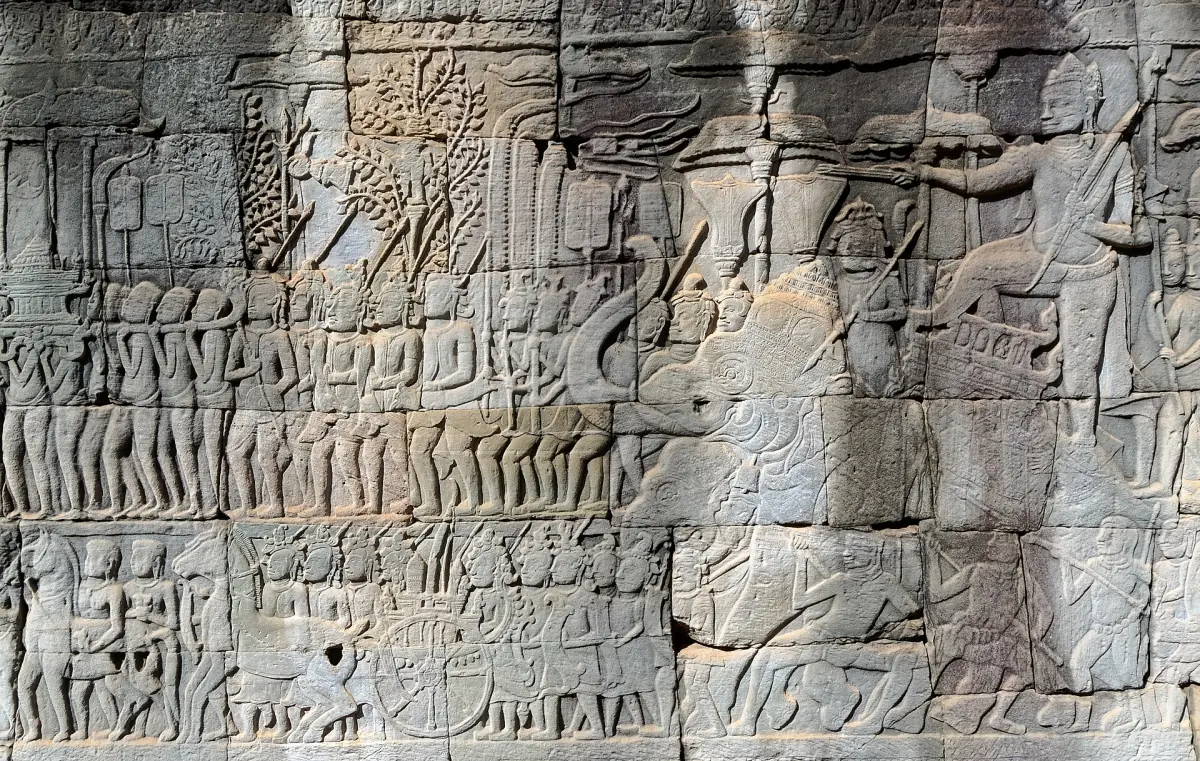
The Apsaras are only one subject among many at the Bayon. The towers have their stone faces, and the galleries have long reliefs of markets, boats and battles. The bas-reliefs page shows what to look for on the walls.
Apsara dance today: the Royal Ballet of Cambodia
Apsara dance belongs to the wider tradition of the Royal Ballet of Cambodia. UNESCO proclaimed it a masterpiece in 2003 and added it to the Representative List of the Intangible Cultural Heritage of Humanity in 2008. That recognition covers the classical ballet as a tradition. It does not apply to every show with the word Apsara in its name, so do not take it as a quality mark for a specific evening.
The modern dance looks to the reliefs of Angkor for inspiration. Today's choreography should not be taken as unchanged since the time the Bayon was built. Think of the dance as a living tradition that links itself to the carved figures, not as a copy of a medieval performance.
How to choose an Apsara dance show
Prices, start times and booking rules differ from show to show, and they change. Rather than rely on a number from a guide, ask these questions before you book:
- What is the price? And does it include dinner, drinks or only a seat?
- When does it start and how long does it last? Plan around your temple day.
- Do children pay a different price? Ask for the child conditions directly.
- Can you reserve? Find out whether a reservation is needed on your evening.
- What is the cancellation rule? Check it before you pay.
Where you sleep matters little for getting to a show, but a central base such as the Old Market and Pub Street area is lively in the evening. See Siem Reap for the town and where to stay for the Bayon for areas to compare.
Plan a Bayon day with a dance evening
One simple order of events.
Morning or midday at the Bayon
The temple opens at 7:30. It tends to be fuller after the Angkor Wat sunrise crowds arrive and later in the morning.
Visiting tips →Find the Apsara pillars
Stop at the pillars in front of the eastern entrance and look at the groups of dancers.
Get the right pass
The Angkor Pass costs $37 for one day, $62 for three days within 7 days and $72 for seven days within 30 days (2026).
Tours with the Bayon →Evening show in town
Book it separately and follow the questions above. Leave time to rest after a day of walking.


Apsara dance: frequently asked questions
What is an Apsara?
An Apsara is a celestial dancer. At the Bayon, Apsaras are carved on pillars in front of the eastern entrance. In Siem Reap, the same figures inspire a classical dance.
Can I see an Apsara dance at the Bayon?
The Bayon shows dancing Apsaras in stone, and the dance shows take place in Siem Reap.
Is Apsara dance on UNESCO's list?
The Royal Ballet of Cambodia was proclaimed a masterpiece in 2003 and added to the Representative List in 2008. This applies to the ballet tradition, not to every show that uses the name.
Is today's dance the same as in the Bayon era?
Do not assume so. The modern dance draws on the Angkor reliefs, but it is a living tradition, and its choreography should not be taken as unchanged since the Bayon was built.
How much does a show cost?
Prices differ by show and change, so ask the venue before you book. The Apsaras carved at the Bayon come with your Angkor Pass, which costs $37 for one day (2026).
Where are the Apsaras at the Bayon?
Carved on the pillars in front of the eastern entrance, often as a group of three on lotus flowers, with smaller groups beside them.