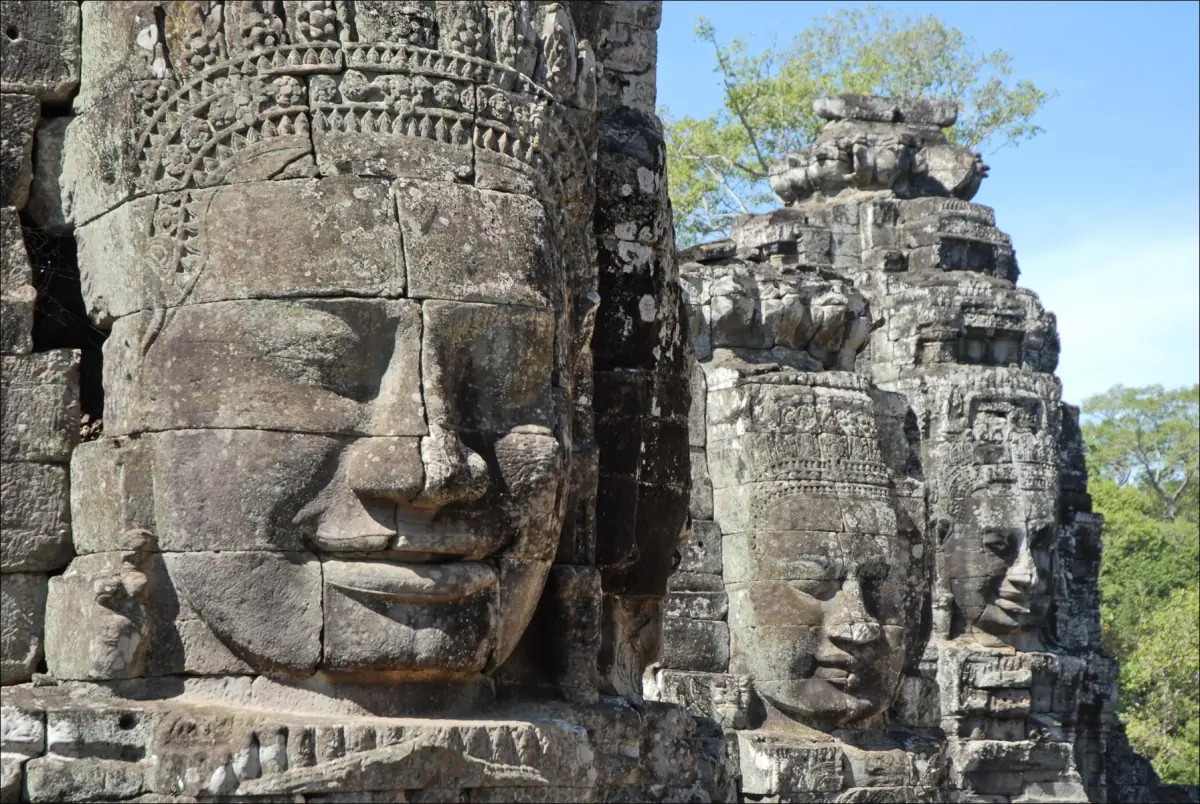
Avalokiteshvara and the Bayon at a glance
Avalokiteshvara is the bodhisattva of compassion and one of the key figures of Mahayana Buddhism. In Cambodia you will often meet him under the name Lokeshvara. At the Bayon his name comes up whenever someone asks the big question: whose faces are these?
The short answer is that nobody can say for certain. The temple is partly dedicated to Lokeshvara, a widely cited reading. It sits next to others, and the faces remain a subject of research. This page lays the readings out one by one so you can look at the towers with your own eyes and still know what a guide means when a name is offered.
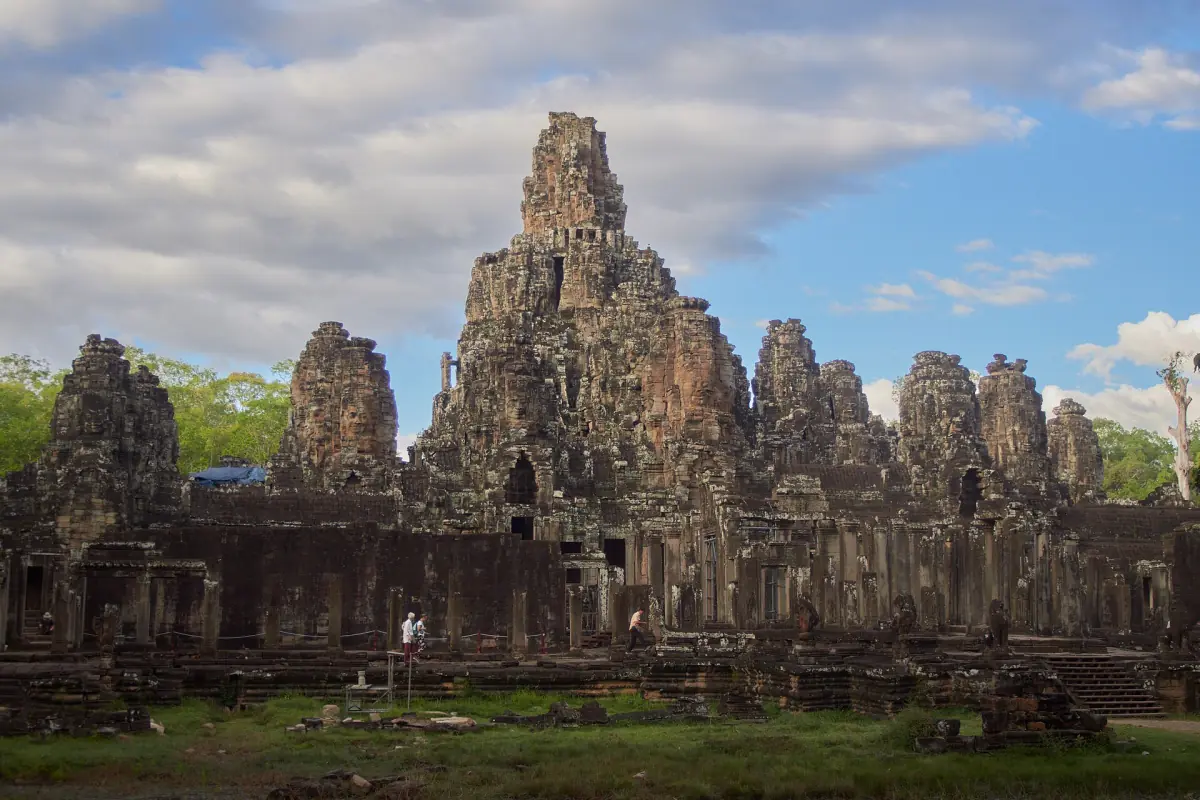
The Bayon is the state temple of the Mahayana Buddhist king Jayavarman VII, built in the late 12th or early 13th century in the middle of his capital Angkor Thom. If you want to stand among the towers with someone who knows the stories, look at Angkor Wat tours with the Bayon that include the temple on the route.
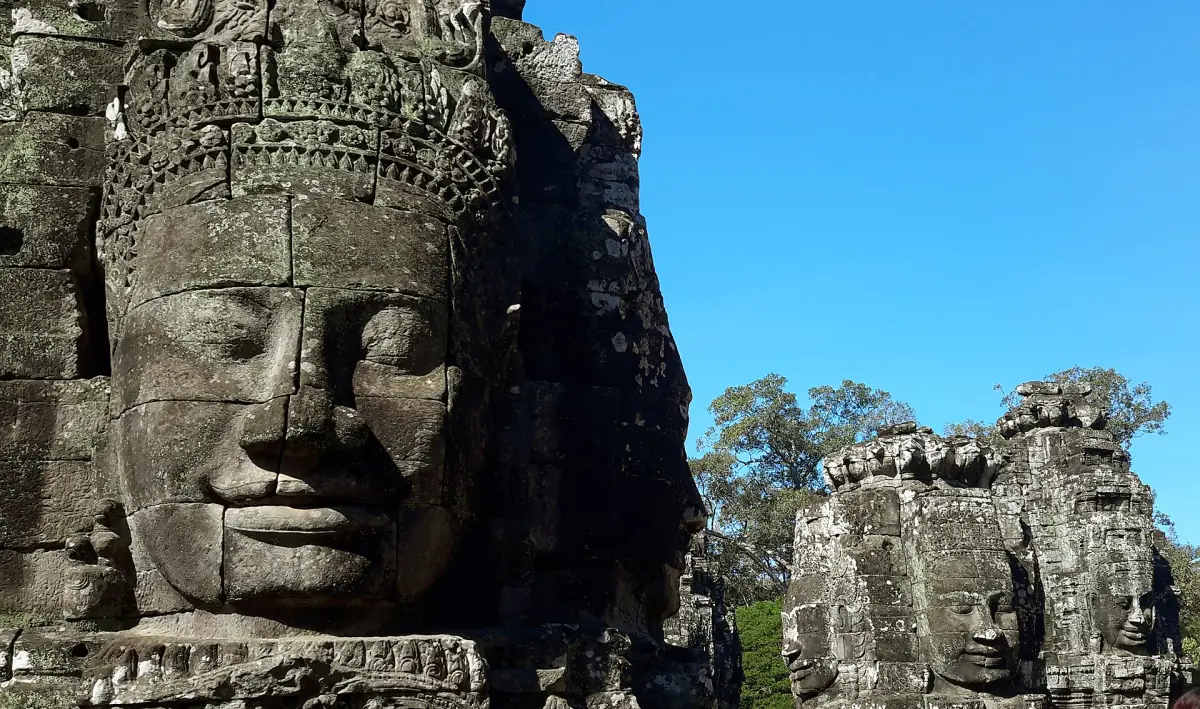
Interpreting the stone faces: five readings side by side
None of these is the single proven answer. Read them as ways of looking, not as a ranking.
| Reading | What it says | Worth keeping in mind |
|---|---|---|
| Avalokiteshvara (Lokeshvara) | The faces show the bodhisattva of compassion, in line with the king's Mahayana faith. | One of the readings; the temple is partly dedicated to this figure. It is not the identity of every face. |
| The Buddha | The faces show the Buddha. | A historical attribution. |
| Brahma and Shiva | The faces belong to Hindu gods. | Also a historical attribution. The Bayon was later changed by Hindu kings. |
| Deva, Devata and Asura | A sorting of the faces into types of divine beings. | A classification used in current research, not a single name. |
| The king himself | The faces give Jayavarman VII a divine presence. | It does not follow that every face is his portrait. |
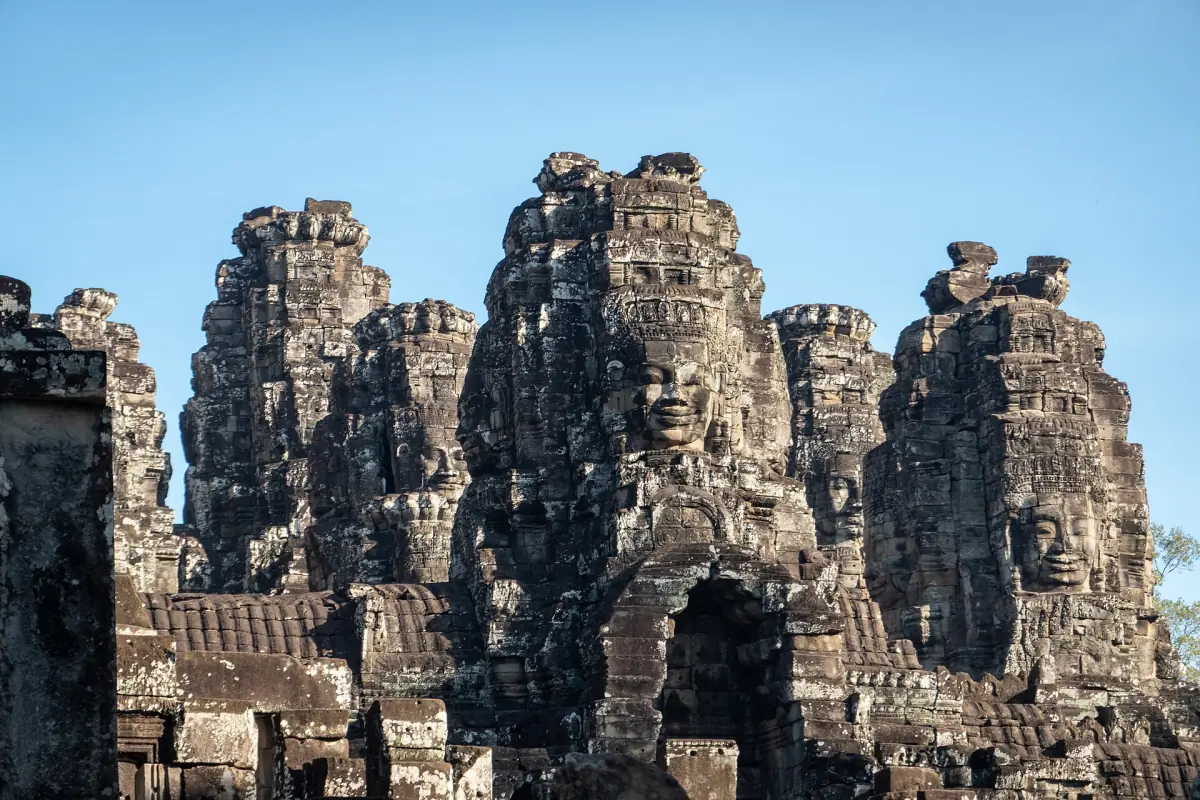
For most visitors, the most useful approach is to hold the readings side by side. Look at the calm expression, the lowered eyes and the faint smile, and treat any single label you hear as one interpretation among several.
Our pick: the Bayon with a guide
A day tour that visits the Bayon in Angkor Thom, where a guide can put the competing readings of the faces in context.
Hand-picked tours, booked through GetYourGuide. Prices are indicative starting prices in US dollars (as of October 2026). Tap a tour for live availability and the current price in your currency.
Guided Angkor tours that include the Bayon
Half-day and full-day tours through Angkor Thom and the Bayon, with live prices and availability. Check that the route includes the Bayon before you book.
Who is Avalokiteshvara?
Avalokiteshvara is the compassionate bodhisattva, a being who helps others toward release. One feature of his image in Buddhist art is a small figure of the Buddha Amitabha in the crown. In depictions elsewhere, Avalokiteshvara can have several heads or arms. Those traits do not describe every Bayon face.
When you hear "Lokeshvara" at the Bayon, it is the same compassionate figure under a name used in Cambodia. People often connect the lowered eyes and the gentle expression of the faces with this idea of compassion. That is a response to the carving, not proof of who is portrayed.
Devaraja is a different term
You may also hear "Devaraja" in this context. It is not another name for Avalokiteshvara, and the categories Deva, Devata and Asura are not interchangeable with it either. A fixed Devaraja identity for all the faces is not established, so keep these words apart.
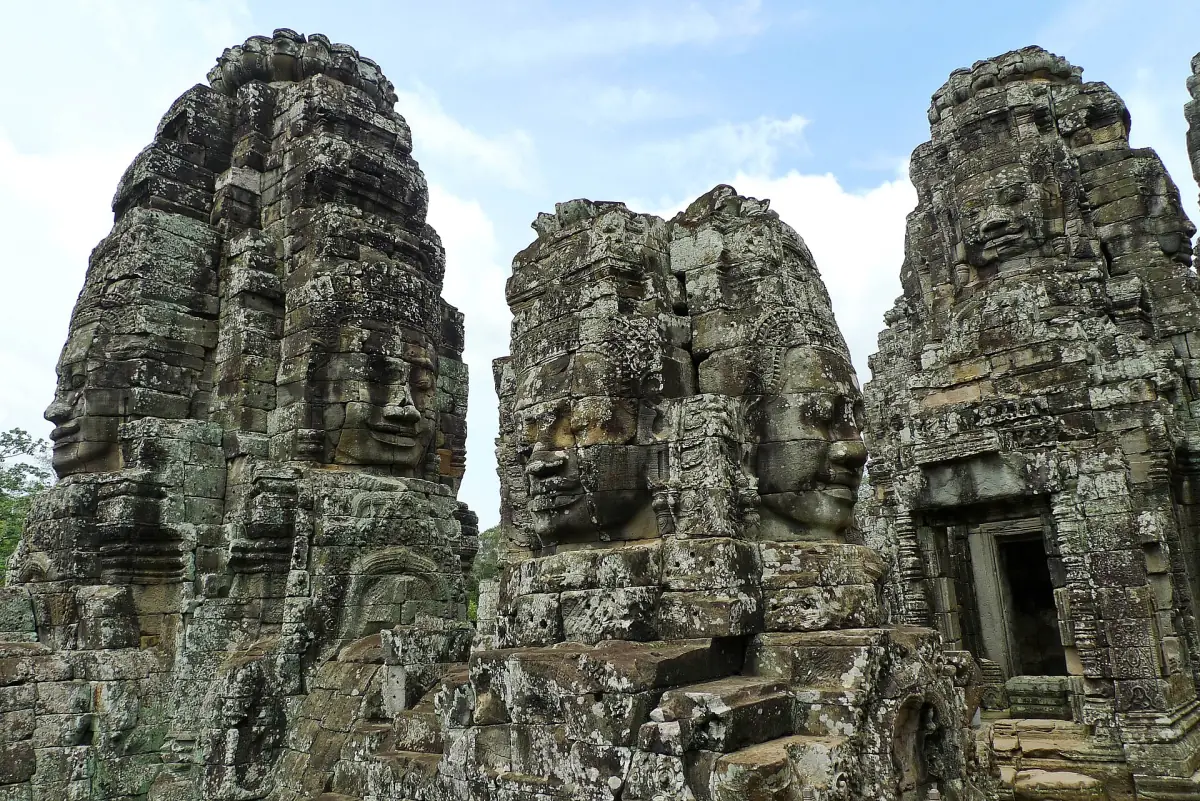
Buddhist temple in Cambodia: why the Bayon carries several faiths
Many visitors ask whether the Bayon is a Buddhist or a Hindu temple. The honest answer is both, at different times. Jayavarman VII built it as the state temple of his Mahayana Buddhism. Later Hindu and Theravada Buddhist kings changed it.
Under Jayavarman VIII the Bayon was turned into a Hindu temple, and Buddhist images were removed. Later it returned to Buddhist use. This layered history is one reason why several readings of the faces exist side by side, and why it is wise to be cautious about any single tidy explanation. The full story is on the Khmer Empire and Bayon history page.
Today the Bayon is part of the Angkor World Heritage site. Angkor is not a single temple but a landscape of temples, water systems and roads. Towers, galleries and reliefs at the Bayon belong to different phases of that long history.
What to look for when you stand among the faces
Take your time, because the faces change with every step.
The "Smile of Angkor"
The slightly raised lips and lowered eyes are widely called the Smile of Angkor. The phrase is a popular description, not a name used by the builders.
More on the faces →Three faces or four
Do not assume every tower has exactly four faces. Some towers carry three. Count for yourself as you walk around a tower.
Towers and counts →Walls and faces together
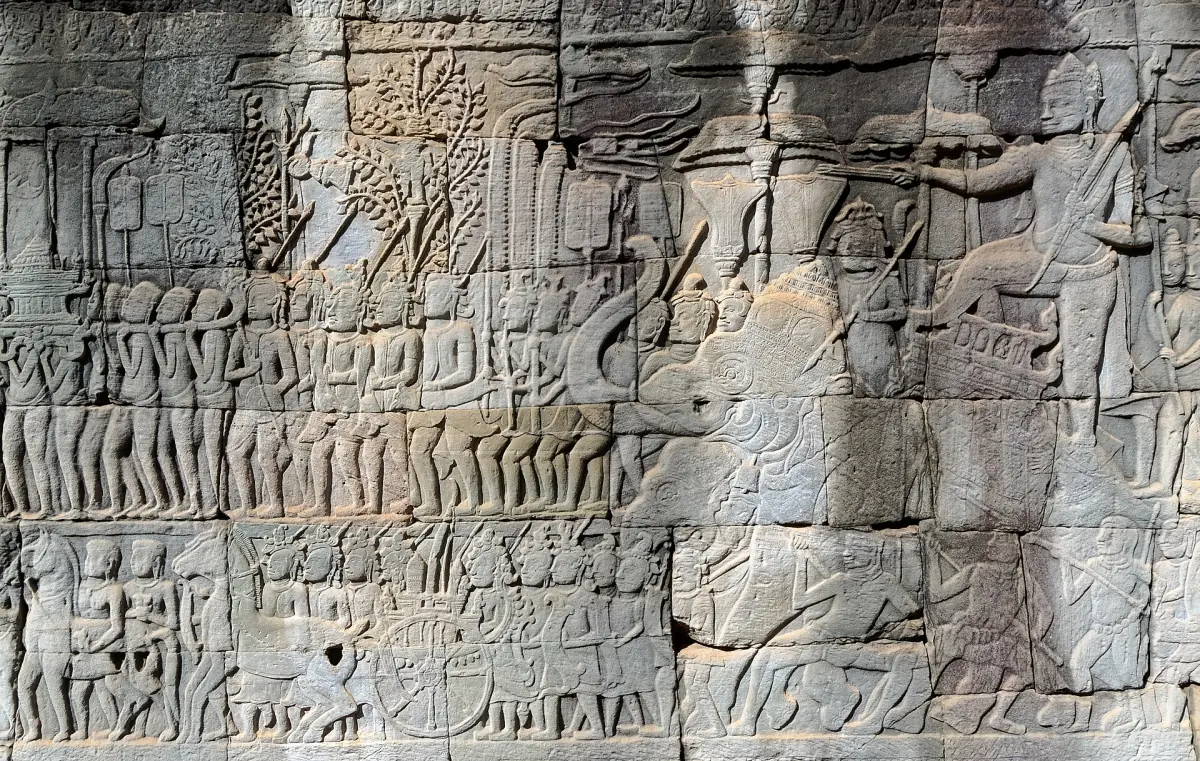
The reliefs on the galleries show kings, battles and daily life. Seeing them together with the faces shows how the temple speaks about both gods and people.
The bas-reliefs →The upper terrace
The upper terrace may be closed (as of July 2026), so check on site.
Visiting tips →Counting faces and towers
Counts differ: roughly about 170 to 180 surviving large faces on 37 to 52 towers, depending on whether only the towers still standing or the original design are counted. The figures come from different counting methods and dates, so do not mix them.
This is why guides at the Bayon sometimes quote different figures. Use the numbers as a rough scale. The towers are a good place to compare the readings for yourself.
For your day on site: the Bayon is open 7:30–17:30. The Angkor Pass costs $37 for one day, $62 for three days within 7 days and $72 for seven days within 30 days (2026). Children under 12 enter without a ticket. The Angkor Pass guide explains where to buy it.
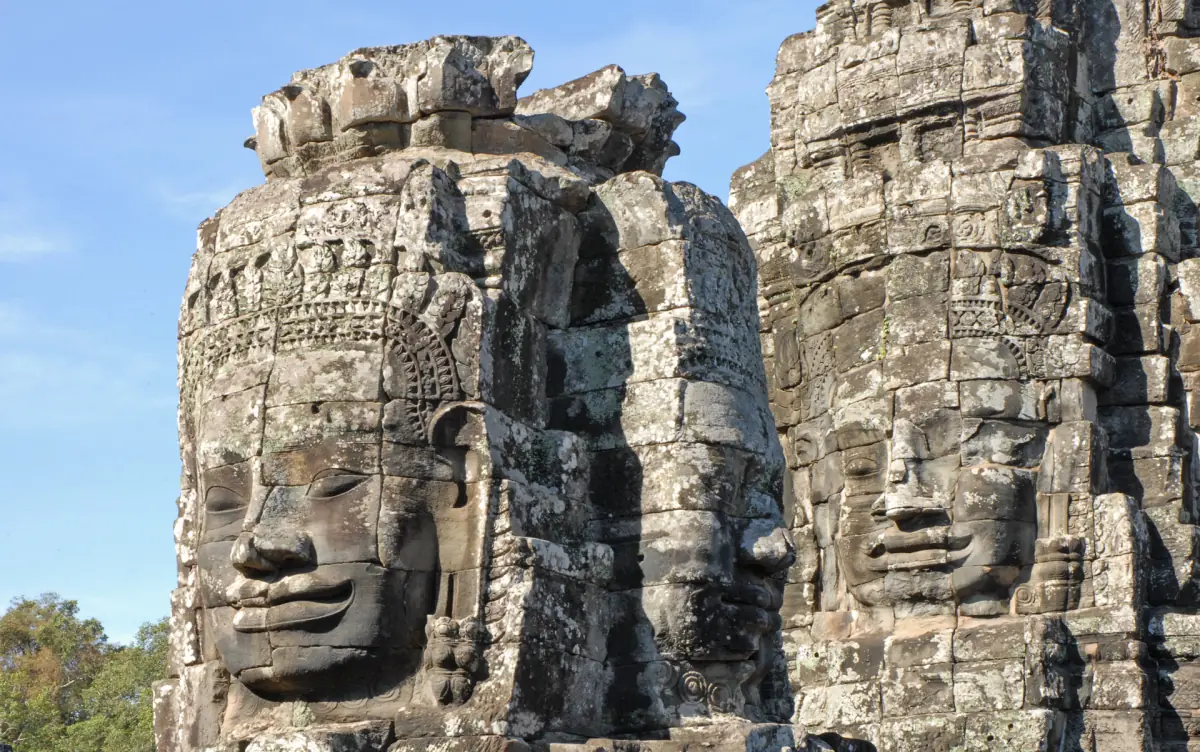
Respectful viewing
The Bayon is a sacred place, and visitors are asked to dress with respect. Cover your shoulders and knees. Shorts or skirts that end above the knee and bare shoulders are not allowed at holy sites. Keep your voice low, do not smoke or drop litter, and do not touch the carvings. Follow signs and barriers, and do not climb on loose stones.
If you are interested in the wider Angkor Thom area around the Bayon, the sister guide for Angkor Thom covers the gates, terraces and palace area.
Avalokiteshvara at the Bayon: frequently asked questions
Are the Bayon faces Avalokiteshvara?
Avalokiteshvara, known in Cambodia as Lokeshvara, is one of the readings, and the temple is partly dedicated to him. Other readings name the Buddha, Brahma, Shiva or the king himself. The identity of the faces is still being studied.
Is Lokeshvara the same as Avalokiteshvara?
Yes, it is the same compassionate bodhisattva under a name used in Cambodia.
Are all the faces portraits of Jayavarman VII?
No, you should not assume that. A reading that links the faces to the king exists, but it does not follow that every face is his portrait.
Does every tower have four faces?
Not necessarily. Some towers carry three faces. Counts of towers and faces also differ depending on how they are counted.
Is Devaraja another name for Avalokiteshvara?
No. Devaraja is a different term, and the categories Deva, Devata and Asura are not interchangeable with Avalokiteshvara either. A fixed Devaraja identity for all the faces is not established.
What do I need to enter the Bayon?
An Angkor Pass: $37 for one day, $62 for three days within 7 days, or $72 for seven days within 30 days (2026). The Bayon is open 7:30–17:30. Cover shoulders and knees.