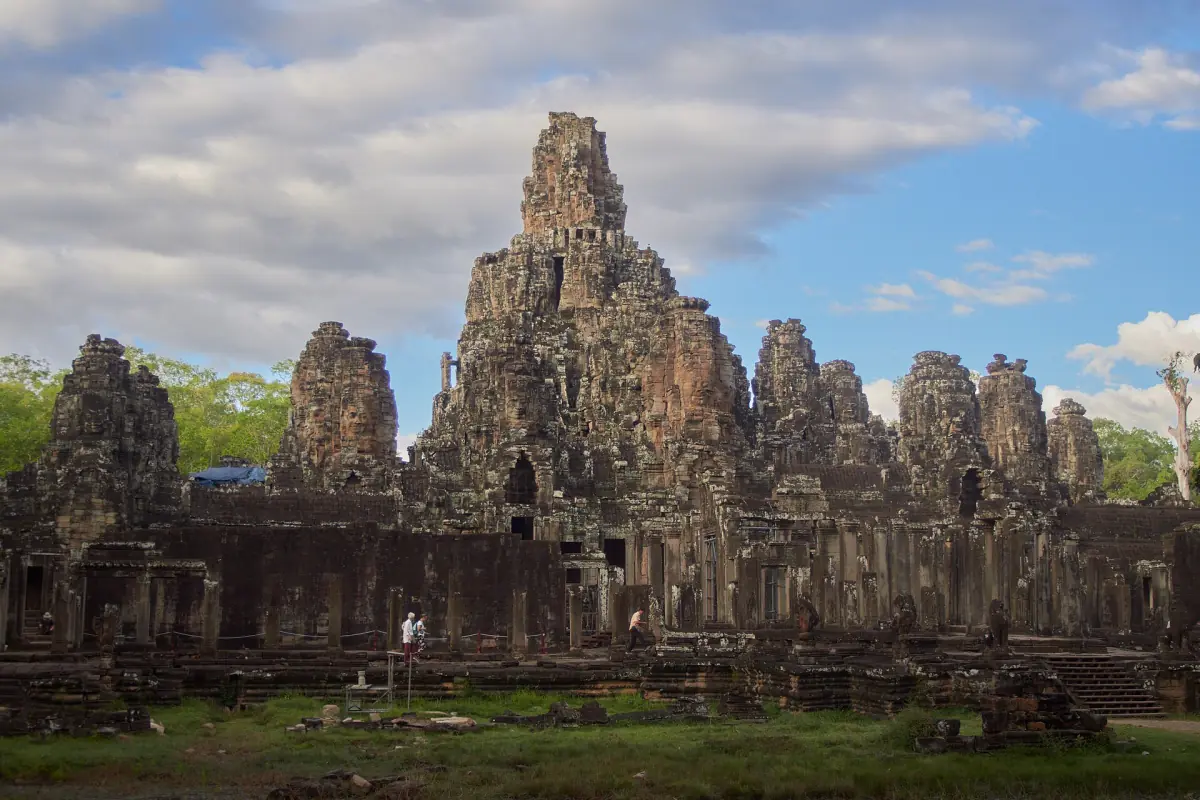
The Khmer Empire and the Bayon at a glance
The Bayon is the state temple of the Mahayana Buddhist king Jayavarman VII. It was built in the late 12th or early 13th century in the centre of his capital, Angkor Thom. Today it stands inside the Angkor World Heritage site near Siem Reap.
The Bayon is not a single moment in time. Kings of different faiths changed it after Jayavarman VII, and scholars are still working out parts of its story. This page gives you the main lines so that the temple makes sense when you stand in front of it. To see the Bayon with a guide who knows these layers, look at Angkor Wat tours with the Bayon.
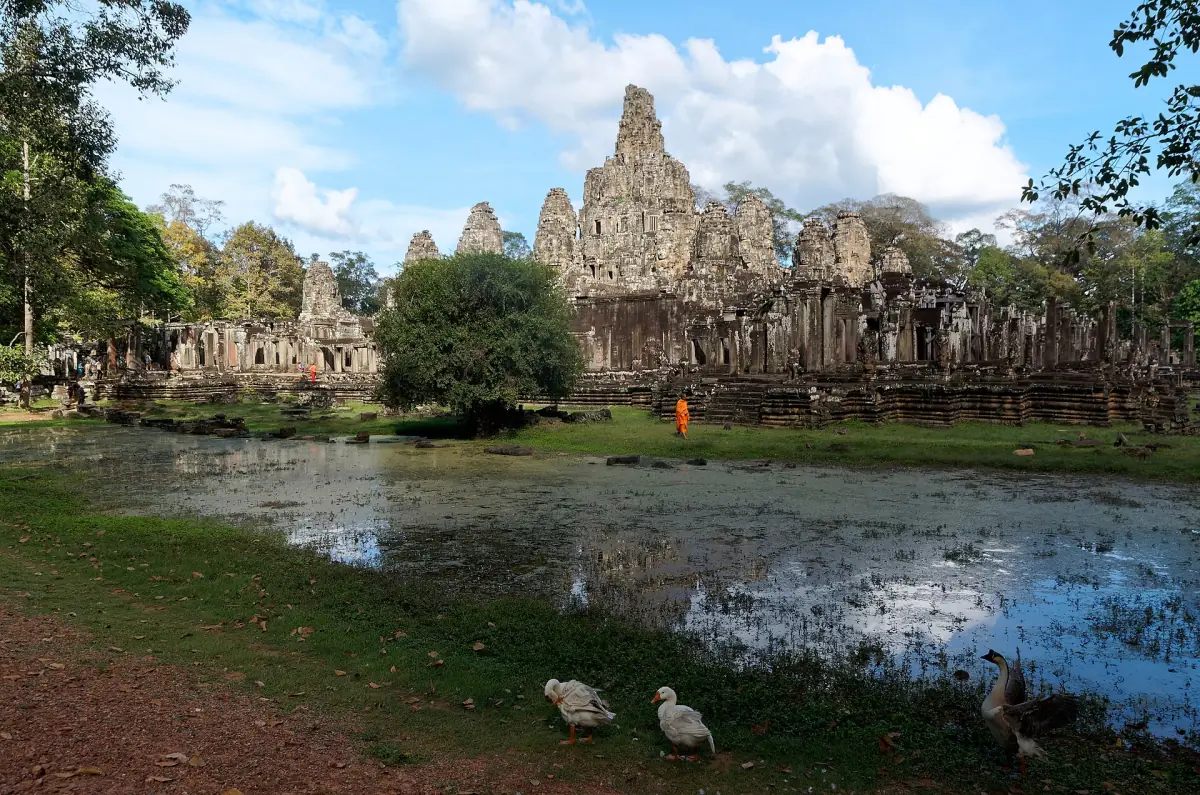
Khmer Empire: the setting of the Bayon
Angkor is not a single temple. It is a landscape of settlements, temples, water systems and roads. Over the 9th to the 15th century, a series of capitals stood here. When people talk about the Khmer Empire in connection with the Bayon, they mean this long period and this region.
Angkor Thom, the walled city around the Bayon, is the capital of Jayavarman VII, and the Bayon stands in its middle. Angkor Wat, Ta Prohm and the other famous monuments belong to the same wider landscape and have their own guides. The sister guides cover Angkor in general and the history of Angkor Thom.
Angkor covers about 400 square kilometres including forest areas. It has been a World Heritage site since 1992 and was on the list of World Heritage in Danger from 1992 to 2004.
Our pick: two days of Khmer culture
A two-day tour that visits Angkor Wat, Angkor Thom with the Bayon and Ta Prohm, plus a craft village and a monk blessing.
Hand-picked tours, booked through GetYourGuide. Prices are indicative starting prices in US dollars (as of October 2026). Tap a tour for live availability and the current price in your currency.
Angkor tours that include the Bayon
Half-day and full-day tours through Angkor Thom and the Bayon, with live prices and availability. A guide helps you read the temple's layers. Check that the route includes the Bayon.
Jayavarman VII and the Bayon
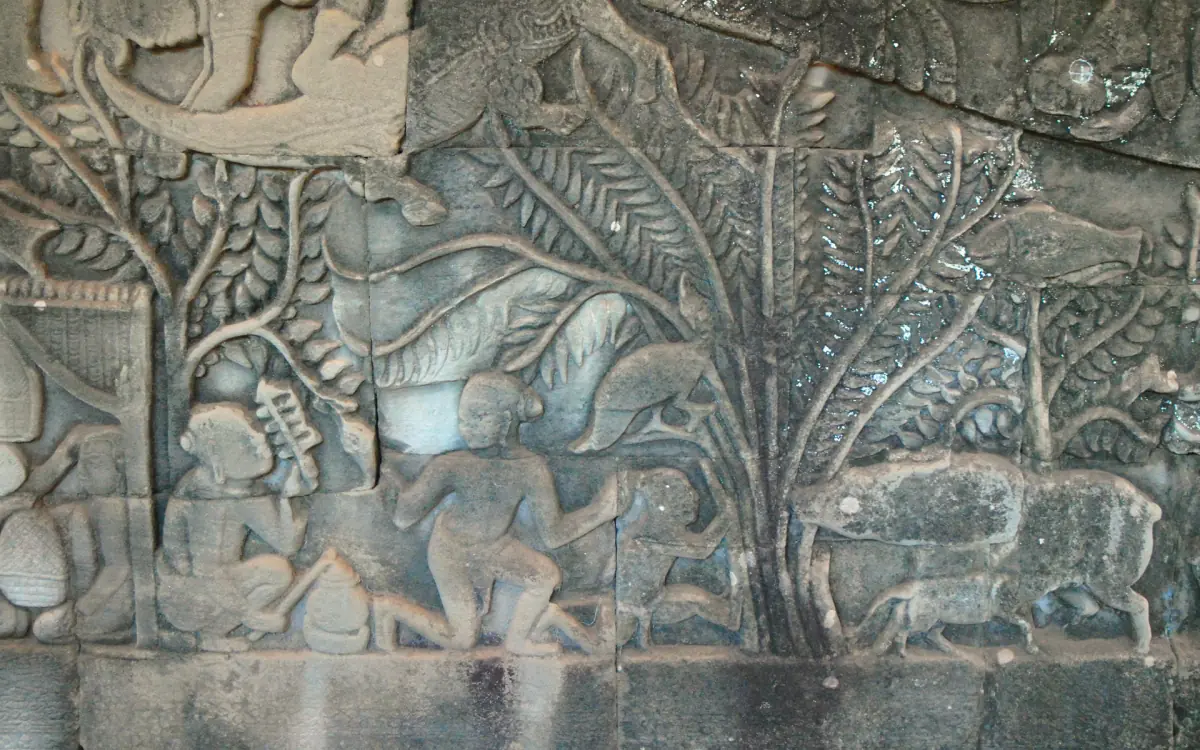
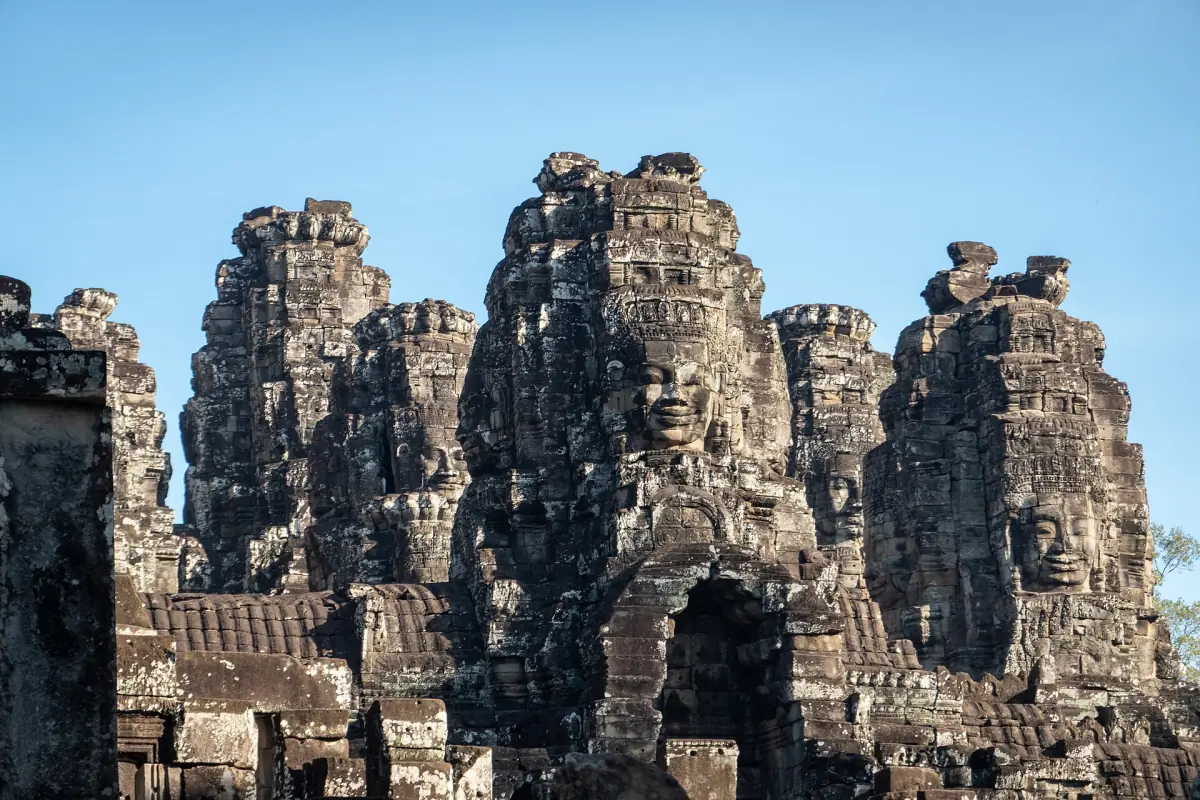
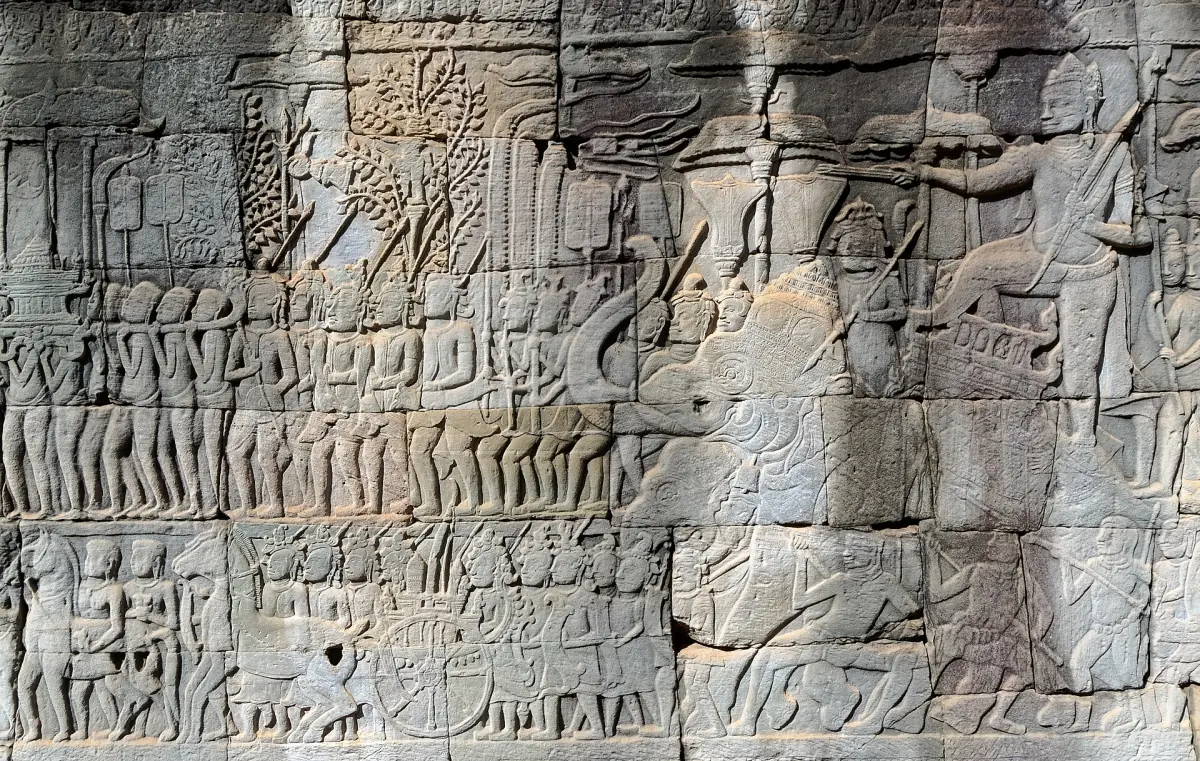
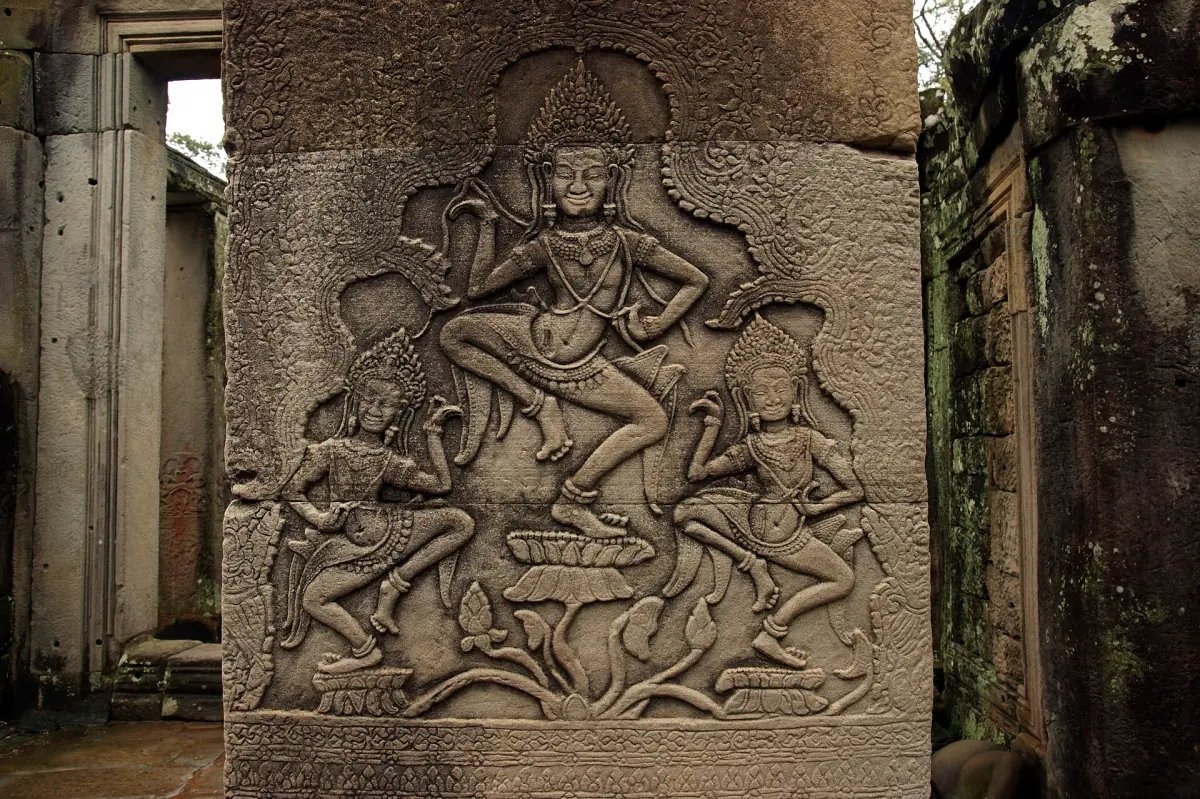
Jayavarman VII had the Bayon built as the state temple of his Mahayana Buddhism. Its towers carry large stone faces, and its galleries carry two relief cycles with mythological, historical and everyday scenes. The temple has three levels: an outer gallery at the bottom, an inner gallery with its corridors in the middle, and the central structure on top.
The faces and their meaning are a topic of their own. Several readings exist side by side, from the bodhisattva Avalokiteshvara to the king himself. See Avalokiteshvara at the Bayon for the readings and the faces for the towers.
The Cham wars
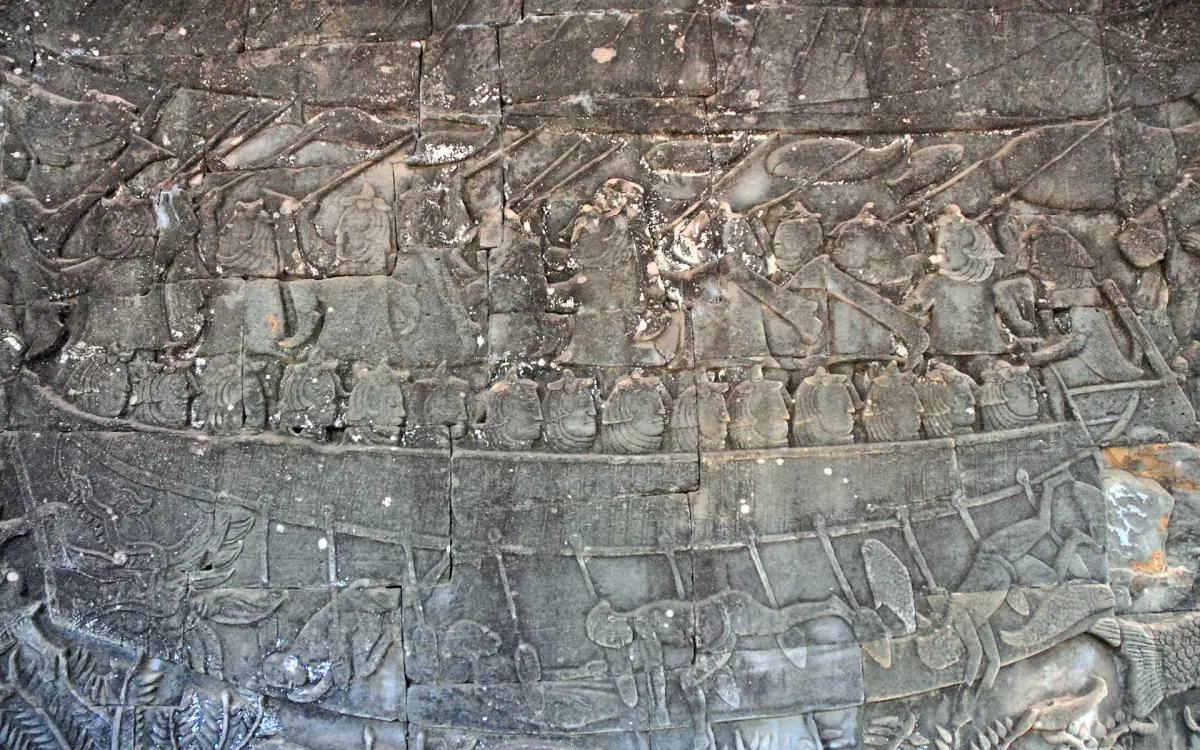
The Cham occupied the capital between 1177 and 1181. The reliefs include scenes with boats and warriors that are often read against these wars. Individual scenes cannot be tied to one battle or year, and the bas-reliefs page shows what to look for.
Bayon temple history after Jayavarman VII
After Jayavarman VII, later Hindu and Theravada Buddhist kings changed the Bayon. Under Jayavarman VIII the temple was turned into a Hindu temple, and Buddhist images were removed. Afterwards it returned to Buddhist use.
These changes are visible in the temple's layered character. They are also part of the reason why visitors hear different explanations for the faces and the reliefs.
The end of Angkor as a capital was a slow process, not a single date. The successive capitals are placed in the 9th to the 15th century, and the end of the capital role is dated to around the 16th century, depending on what is counted. No single cause explains the decline. If you see a neat date or a simple reason, treat it with care.
Timeline of the Bayon and Angkor
The main stages in one place.
| Period | What happened |
|---|---|
| 9th to 15th century | A series of capitals stands in the Angkor landscape |
| 1177 to 1181 | The Cham occupy the capital |
| Late 12th or early 13th century | Jayavarman VII builds the Bayon as his state temple in Angkor Thom |
| After Jayavarman VII | Hindu and Theravada Buddhist kings change the temple. Under Jayavarman VIII it becomes a Hindu temple, later it returns to Buddhist use |
| Around the 16th century | The capital role ends |
| 1992 | Angkor becomes a World Heritage site |
| 1994 | The Japanese Government Team for Safeguarding Angkor (JSA) is founded |
| June 2005 | Bayon Master Plan and Bayon Charter are in place |
| 2026 | A new programme for research on the gallery reliefs holds its first steering committee meeting in June, funded by Japan through UNESCO with 900,000 USD |
For most visitors, the useful picture is a Buddhist state temple of the late 12th or early 13th century that later rulers adapted. Keep that in mind and the mixed signs at the Bayon, Buddhist and Hindu, stop being confusing.
Protecting the Bayon today
The JSA was founded in 1994 and works on research, restoration, technical training and the transfer of knowledge. The Bayon Master Plan and Bayon Charter date from June 2005. They say that conservation should rest on research and keep the original material as far as possible.
Work has covered the north and south libraries, the east facade and, more recently, the central structure and the reliefs of the inner galleries. In June 2026 the steering committee of a new programme with APSARA, the Japanese embassy, UNESCO and Waseda University held its first meeting. The Bayon restoration page explains what this means for your visit.
As a visitor, you help by following the rules. Cover your shoulders and knees, do not touch the reliefs, stay off fragile structures and loose stones, and respect barriers.
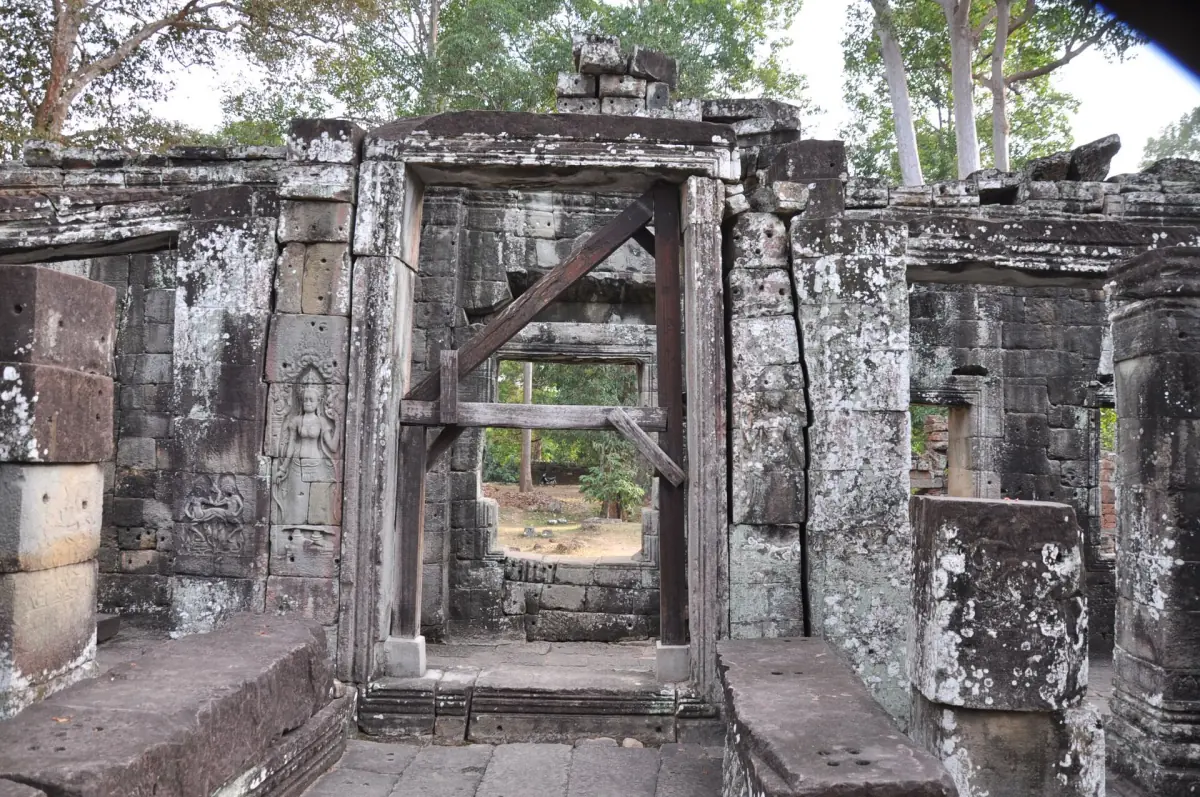
Visiting the Bayon: the essentials
The Bayon is open 7:30–17:30. You need an Angkor Pass: $37 for one day, $62 for three days within 7 days, or $72 for seven days within 30 days (2026). Children under 12 enter without a ticket. The upper terrace may be closed (as of July 2026), so check on site.
See the visiting tips page for crowds and timing, and the Angkor Pass guide for how to buy the pass.
Khmer Empire and Bayon history: frequently asked questions
Who built the Bayon?
Jayavarman VII, a Mahayana Buddhist king, built it as his state temple in the late 12th or early 13th century, in the middle of his capital Angkor Thom.
Is the Bayon a Buddhist or a Hindu temple?
Both, at different times. It began as a Buddhist temple. Under Jayavarman VIII it became a Hindu temple and Buddhist images were removed. Later it returned to Buddhist use.
When did the Khmer Empire end?
There is no single date. The successive capitals of Angkor are placed in the 9th to the 15th century, and the end of the capital role is dated to around the 16th century. No single cause explains the decline.
Who were the Cham?
The Cham were the people of the historical kingdom of Champa. They occupied the capital between 1177 and 1181. Battle scenes at the Bayon are often read against these wars.
Is Angkor on the World Heritage in Danger list?
Not any more. Angkor has been a World Heritage site since 1992 and was on the danger list from 1992 to 2004.
What do I need to enter the Bayon?
An Angkor Pass: $37 for one day, $62 for three days within 7 days, or $72 for seven days within 30 days (2026). The Bayon is open 7:30–17:30.