
The Bayon faces and their smiles
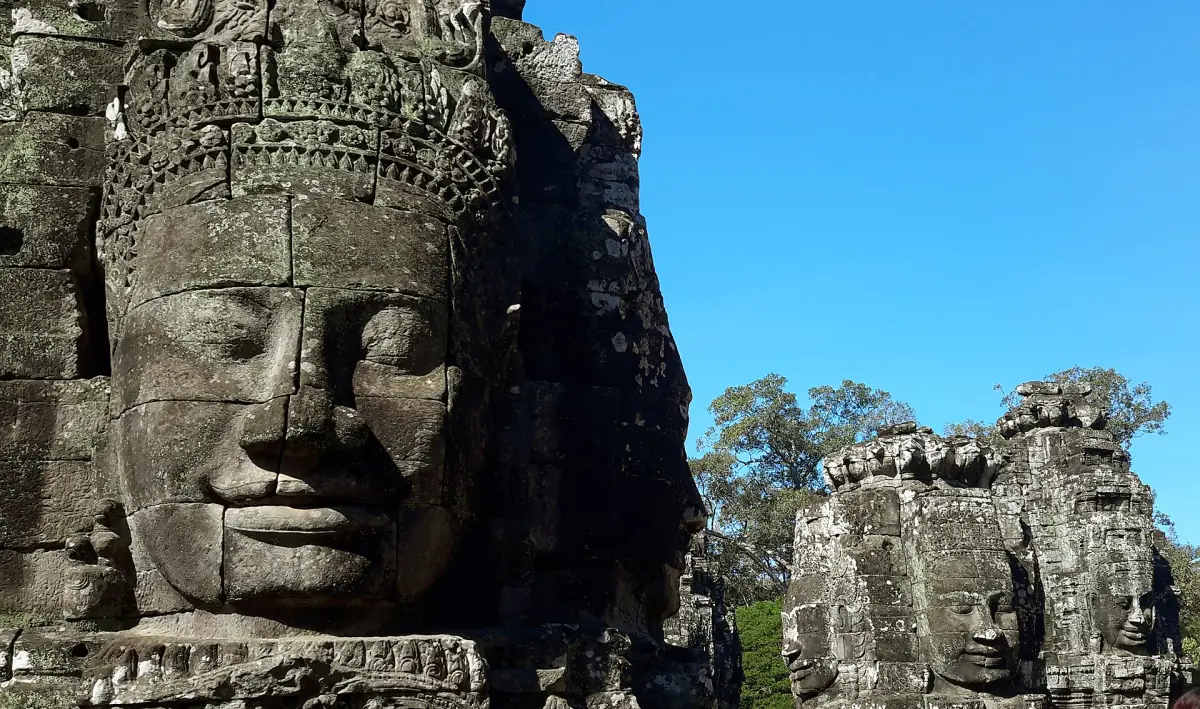
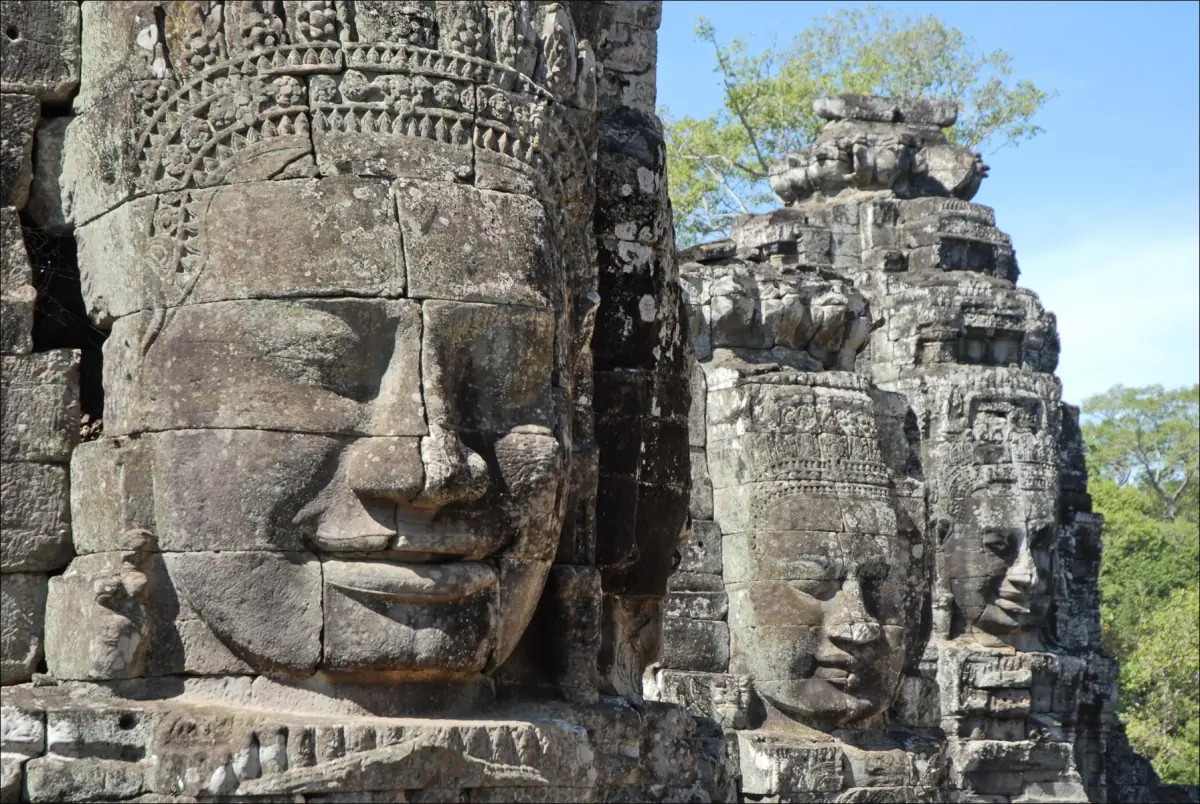
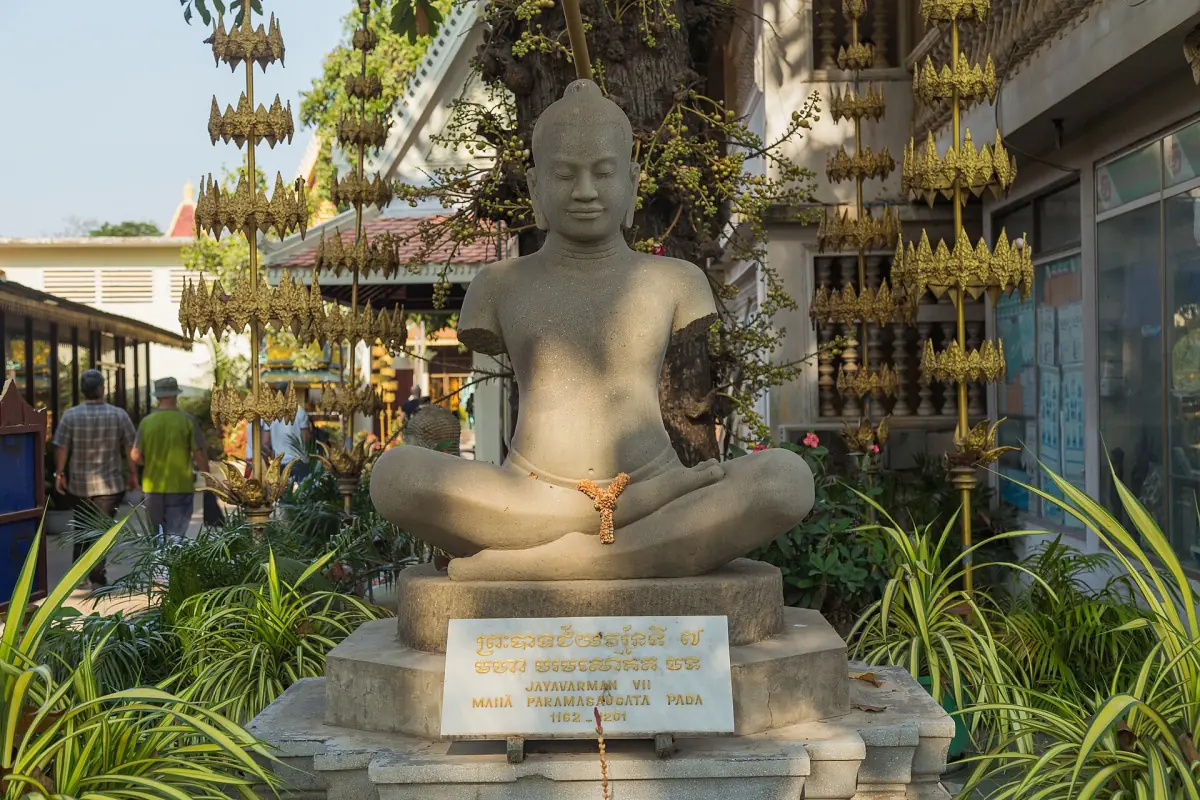
The Bayon is famous for the large stone faces carved on its towers. Their eyes are lowered and the lips are slightly raised, a look that visitors often call the Smile of Angkor. That name is a common description and not a title the builders used. The Bayon faces were carved in the late 12th or early 13th century, when the temple was built as the state temple of Jayavarman VII.
Most people see the faces on a day tour that also includes Angkor Wat and Ta Prohm. If you want a guide who can point out the details, compare Angkor Wat tours with the Bayon before you choose a format.
Our pick: see the faces with a guide
A small-group day that walks through Angkor Thom to the Bayon, with Ta Prohm, Ta Keo and a sunset finish.
Hand-picked tours, booked through GetYourGuide. Prices are indicative starting prices in US dollars (as of October 2026). Tap a tour for live availability and the current price in your currency.
Angkor Wat tours with the Bayon
Small-group and private tours that include the Bayon and its faces, with live prices and availability.
How many faces does the Bayon have?
The answer depends on what is counted.
Counts differ: roughly about 170 to 180 surviving large faces on 37 to 52 towers, depending on whether only the towers still standing or the original design are counted. Treat all numbers as approximate, because they come from different ways of counting and from different dates.
Not every tower carries the same number of faces. Some towers have three, so a figure of exactly four faces on every tower does not hold. An old tower number from a plan or an earlier count also does not always match a tower that stands today, which is one more reason the totals vary.
What the stone towers show
The faces, the levels and where you look from.
Three levels
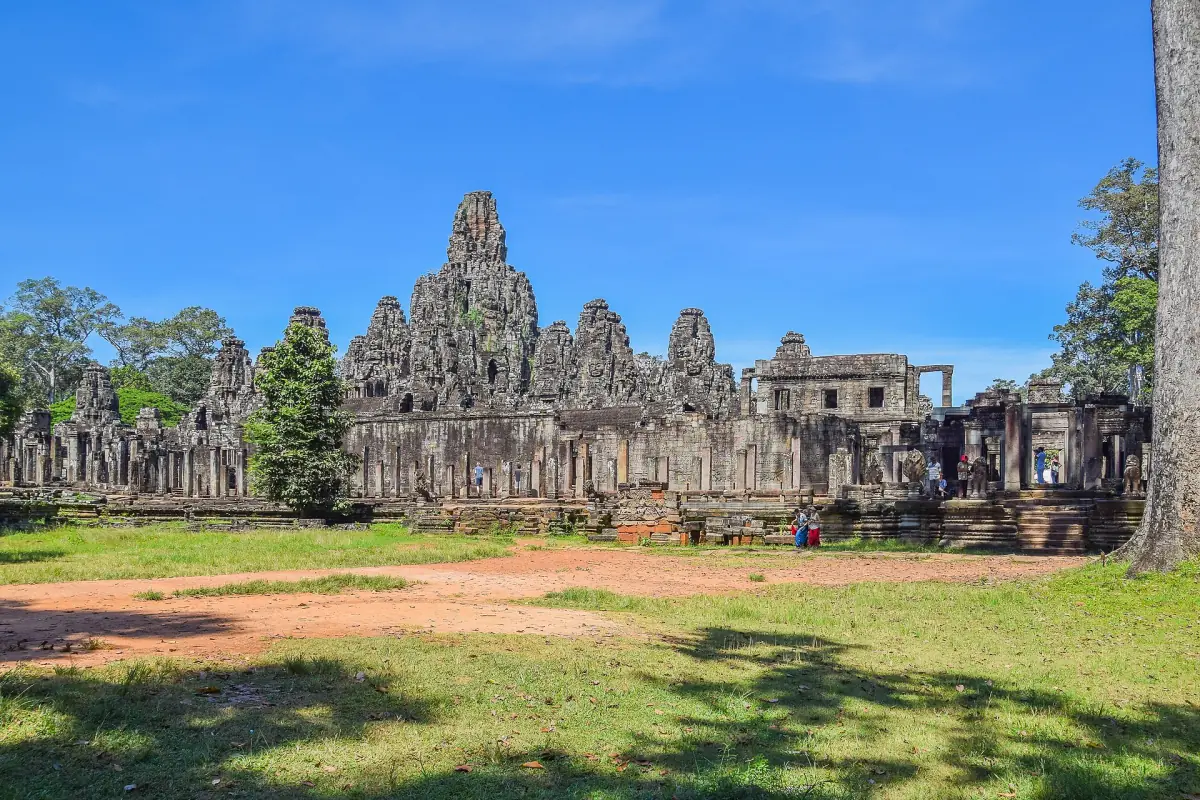
The temple rises in three levels: an outer gallery at the bottom, an inner gallery with cloisters in the middle and the central structure above. Which levels you can reach can change. The upper terrace may be closed (as of July 2026), so check on site.
Opening hours and visiting tips →The look of the faces
Each large face has lowered eyes and raised lips, and the towers rise above the galleries. Give yourself time to walk around the temple and look up from different sides.
The reliefs below
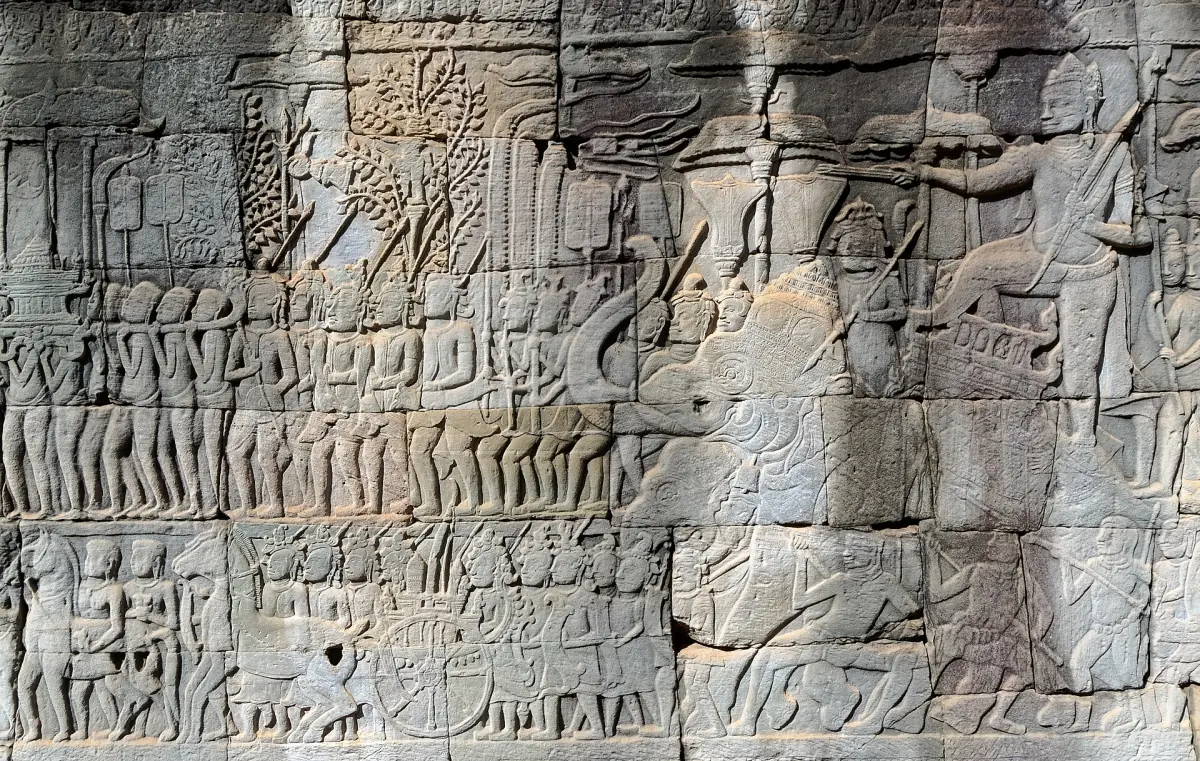
The faces are only one half of the Bayon. The galleries carry two cycles of reliefs, with battles, markets and daily life. Read about them on the bas-reliefs page.
Who do the faces show?
Several readings exist. None is certain.
The identity of the faces is still a subject of research. Readings link them to Brahma, Shiva, Buddha, Lokeshvara and the king himself. Current research classifies the faces as deva, devata and asura. None of these readings is a settled answer for every face, and no single figure can be named for all of them.
| Reading | What it says | Note |
|---|---|---|
| Lokeshvara | The faces show the Bodhisattva of compassion, in the Mahayana form linked to Avalokiteshvara | One of the readings, and the temple is partly dedicated to this figure |
| Brahma, Shiva, Buddha | Faces linked to other deities | Not a single answer for all towers |
| The king himself | Faces as portraits of Jayavarman VII | Not shown for every face |
| Deva, devata, asura | A classification of the faces by type | Describes a type, not a name |
For most visitors, the simplest approach is to look at the faces as a set of different readings and not as one fixed answer. The Avalokiteshvara page covers the Lokeshvara reading in more detail.
Plan the rest of your trip
Where the faces fit into your visit.
Avalokiteshvara at the Bayon
One reading of the faces among several.
The bas-reliefs
Battles, markets and daily life carved in stone.
Khmer Empire and Bayon history
The state temple of Jayavarman VII.
Restoration
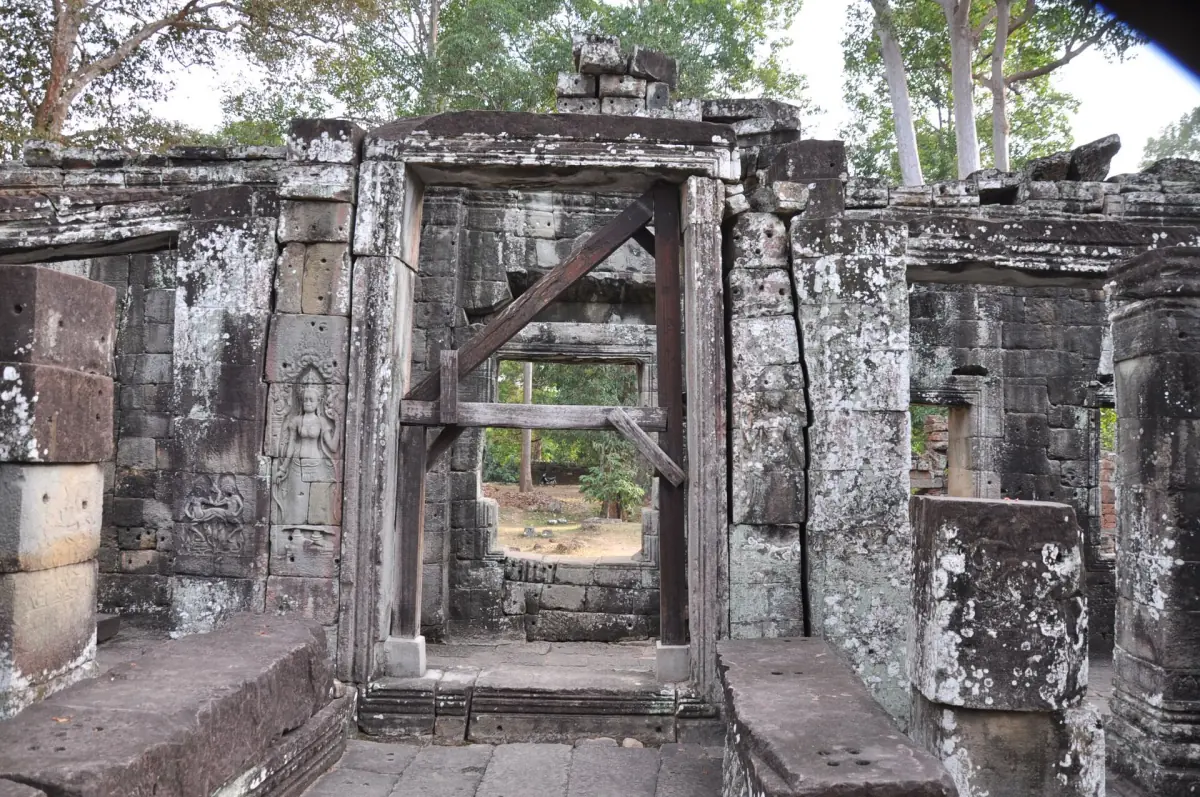
How the towers are looked after.
The other buildings of Angkor Thom, such as its gates, have their own pages at Angkor Thom.
The Bayon faces: frequently asked questions
How many faces are there on the Bayon?
Counts differ: roughly about 170 to 180 surviving large faces on 37 to 52 towers. Treat the numbers as approximate.
Does every tower have four faces?
No. Some towers have three faces, so the number varies from tower to tower.
Who do the faces show?
The question is still open. Readings include Lokeshvara, Brahma, Shiva, Buddha and the king himself, and none of them is established for every face.
What is the Smile of Angkor?
It is a common name for the slightly raised lips and lowered eyes of the faces. It is a description used by visitors, not a name given by the builders.
Can I walk among the towers on the upper terrace?
The upper terrace may be closed (as of July 2026), so check on site.
How many levels does the Bayon have?
Three: an outer gallery at the bottom, an inner gallery with cloisters in the middle and the central structure above.