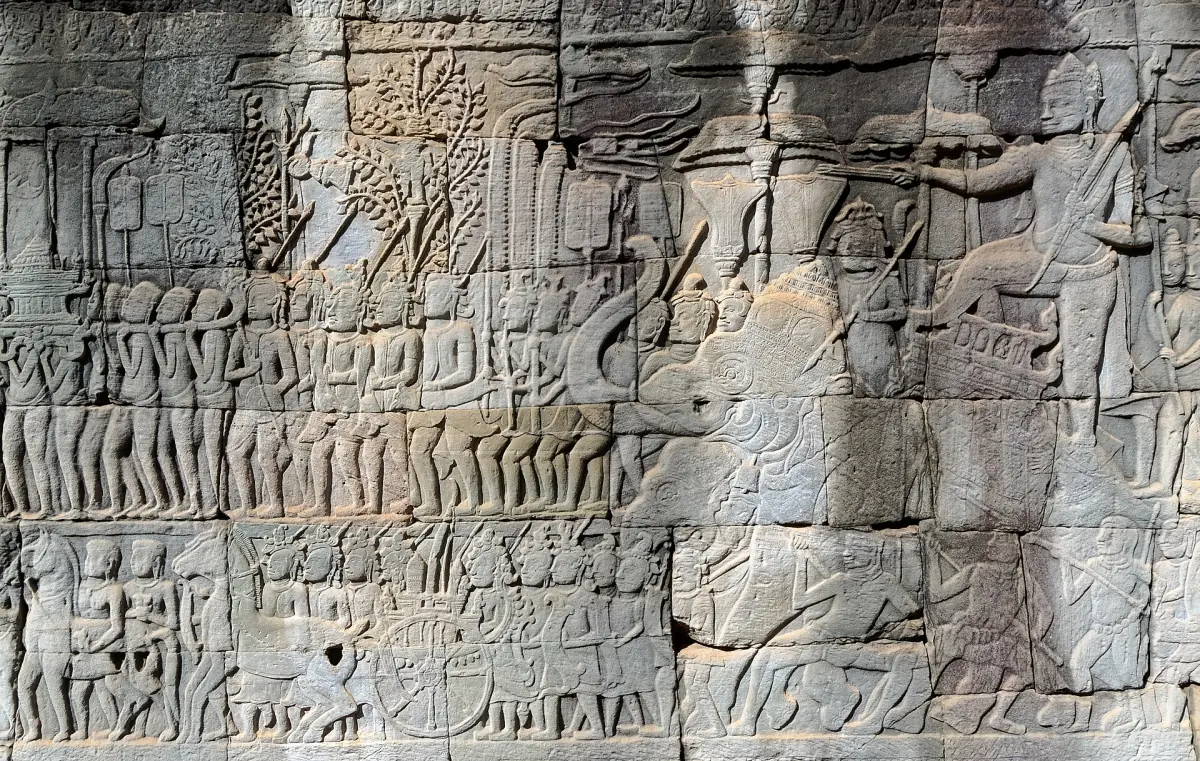
The Bayon bas-reliefs at a glance
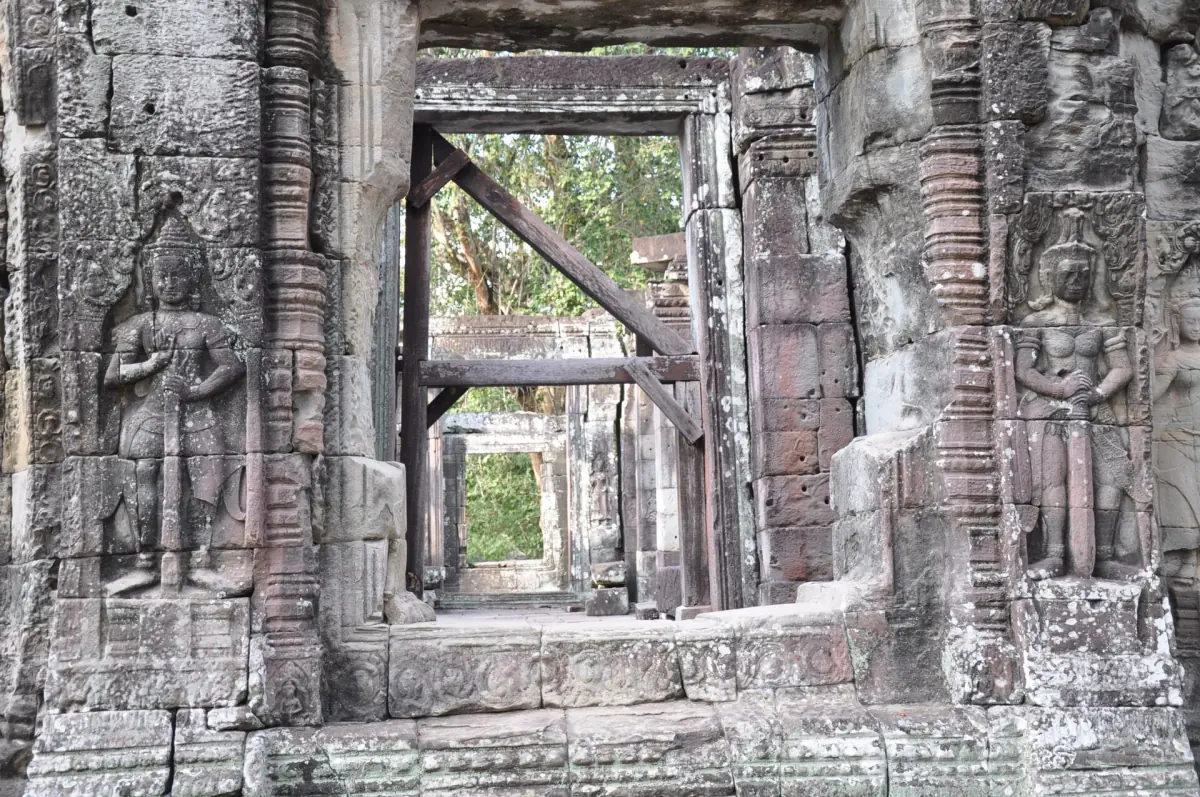
The Bayon has two relief cycles, and together they cover mythological, historical and everyday scenes. Row after row of figures are cut into the galleries, from a market stall to a warship. Many visitors come for the faces on the towers and then spend far longer than planned on the walls.
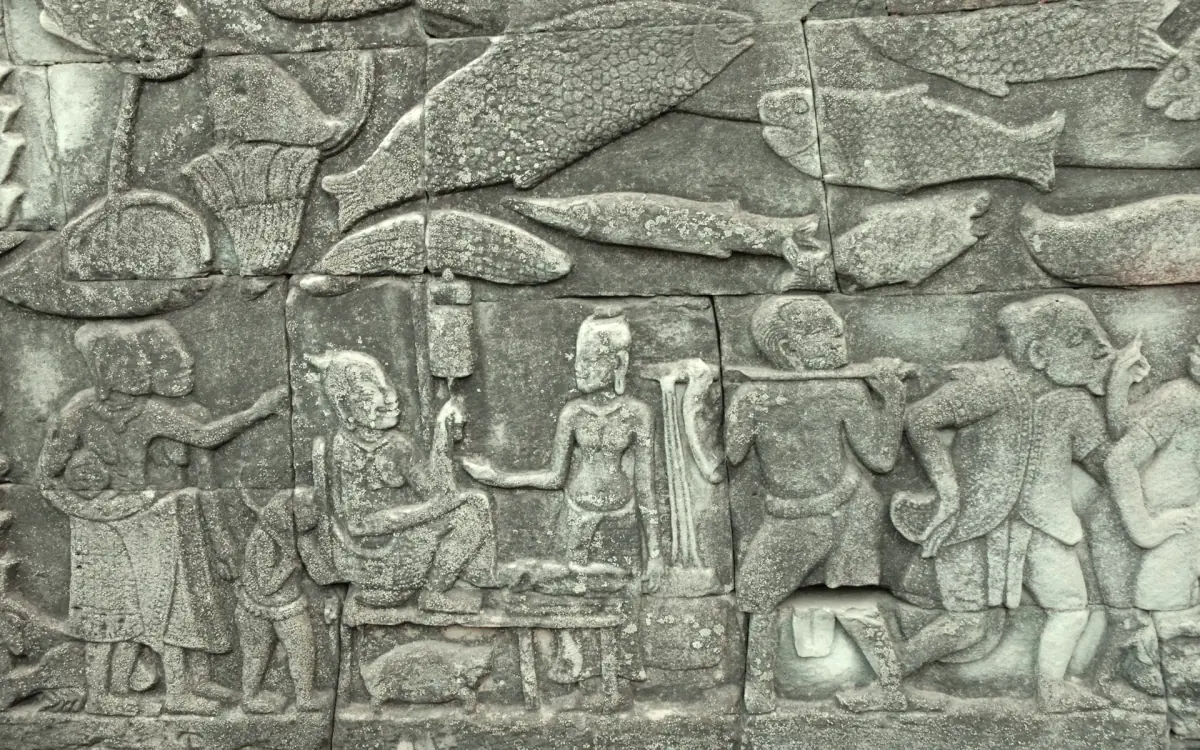
The outer gallery is where the everyday world appears: markets, fishing, festivals, cockfights and jugglers, along with battles and processions. The inner gallery holds the mythological scenes. Shiva, Vishnu and Jayavarman VII are among the themes, next to the lives of ordinary citizens.
If you want someone to point out the details as you walk, choose an Angkor Wat tour with the Bayon that spends real time at the temple.
Outer gallery and inner gallery compared
Both are worth your time, but they feel quite different.
| Outer gallery | Inner gallery | |
|---|---|---|
| Main subject | Everyday life, battles and processions | Mythological scenes |
| Typical scenes | Markets, fishing, festivals, cockfights, jugglers | Religious stories, with Shiva and Vishnu among the themes |
| Suits | Anyone curious about daily life and history | Anyone interested in myth and religious art |
For most visitors, start on the outer gallery, where scenes are easier to read, and move to the inner gallery once your eye is used to the carving style. Some areas can be closed during conservation work, so follow the barriers and signs on the day.
Our pick: a walk on the reliefs
A two-hour guided walk inside the Bayon that explains the daily-life scenes carved in the galleries.
Hand-picked tours, booked through GetYourGuide. Prices are indicative starting prices in US dollars (as of October 2026). Tap a tour for live availability and the current price in your currency.
Angkor tours that include the Bayon reliefs
Guided tours through Angkor Thom and the Bayon with live prices and availability. A guide helps you pick out scenes you might walk past. Check that the route includes the Bayon.
What to look for on the walls
You do not need to see every metre. These themes are a good place to begin.
Markets and cooking
Look for market scenes and people cooking. These scenes show ordinary routines.
Fishing and boats
Fishing is one of the everyday scenes carved on the outer gallery.
Festivals, games and jugglers
Cockfights, festivals and jugglers show how people spent their free time.
Battles and processions
Battles and processions are carved on the outer gallery. Step back to take in the whole panel before looking at details.
Animals and families
Look at the small details: animals and families appear among the everyday scenes.
Treat each scene as a picture of a kind of moment, not as the story of a named person.
The Cham wars in the reliefs
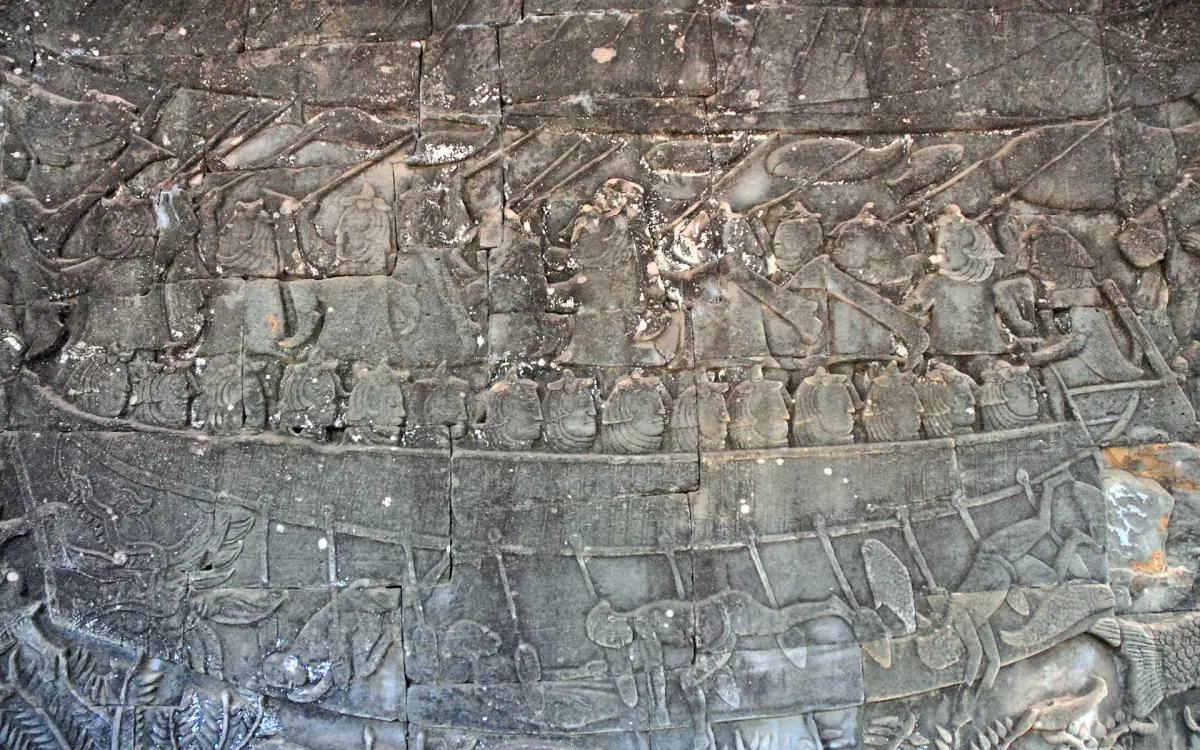
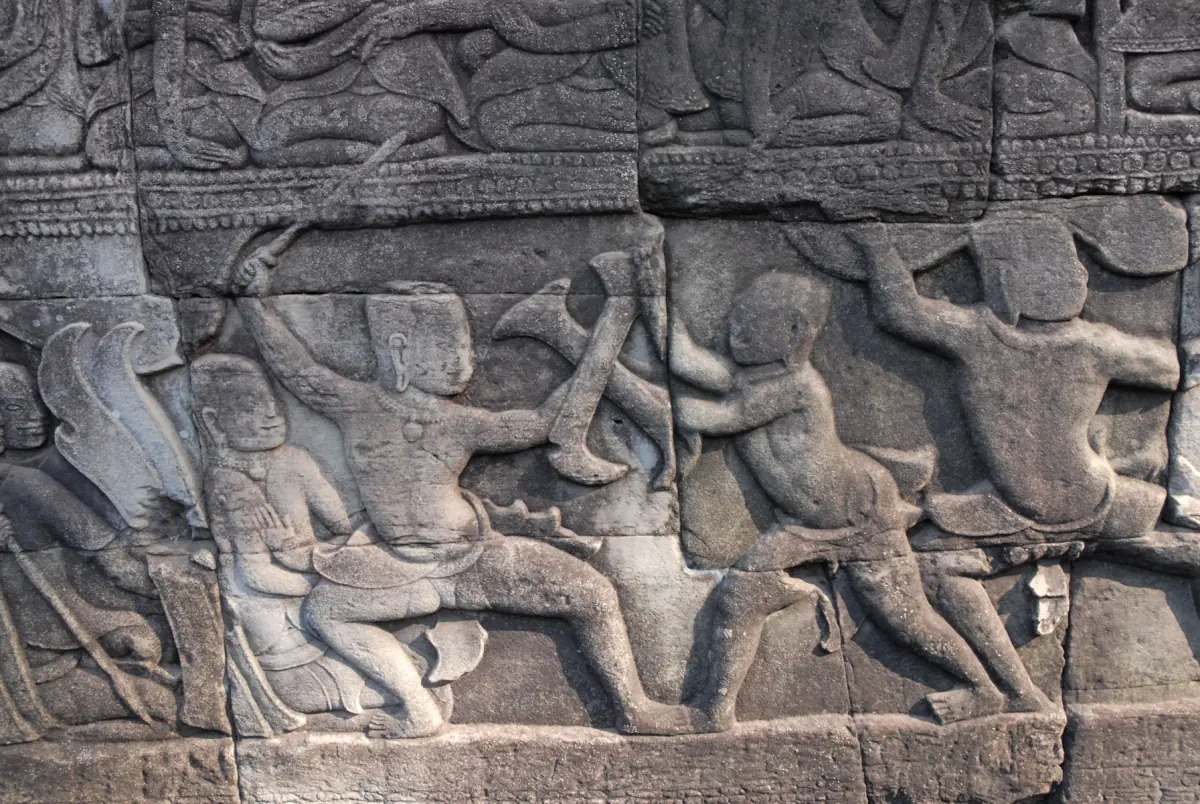
A recurring subject on the walls is war with the Cham, the people of the historical kingdom of Champa. The Cham occupied the capital between 1177 and 1181. Scenes with boats, warriors and fighting figures are often read against this period.
Be careful with dates and places, though. A boat scene cannot be tied to a single battle or a single year, so read these panels as a view of the conflict years rather than a dated record.
How to see the reliefs well
- Walk the gallery slowly. The scenes are detailed and reward a slow pace.
- Choose your time. The temple tends to be fuller after the Angkor Wat sunrise crowds arrive and again later in the morning. Hours at the Bayon are 7:30–17:30.
- Bring a pass. The Angkor Pass costs $37 for one day, $62 for three days within 7 days and $72 for seven days within 30 days (2026). The Angkor Pass guide explains how to buy it.
- Be patient. Wait for a gap in the crowd instead of leaning in for a photo.
Looking after the reliefs
The reliefs are fragile stone. Do not touch them, do not lean on structures, do not move stones and do not climb on loose blocks. Cover your shoulders and knees, keep your voice down and respect signs and barriers.
Conservation work has recently included the reliefs of the inner galleries. In June 2026 the steering committee of a new programme held its first meeting. Japan funds it through UNESCO with 900,000 USD, and its focus is research on the gallery reliefs and the training of specialists. You can read more on the Bayon restoration page.
The reliefs make more sense once you know who built the temple and why. The Khmer Empire and Bayon history page covers that, and the guide to Angkor Thom covers the other monuments inside the old city walls.
Bayon bas-reliefs: frequently asked questions
What do the bas-reliefs at the Bayon show?
The outer gallery shows everyday scenes with markets, fishing, festivals, cockfights and jugglers, plus battles and processions. The inner gallery shows mythological scenes.
Are the reliefs about the war with the Cham?
Battle scenes with boats and warriors are often read against the wars with the Cham, who occupied the capital from 1177 to 1181. A single scene cannot be tied to one battle or year.
Can I touch the carvings?
No. The stone is fragile. Do not touch the reliefs, lean on walls or climb on loose stones.
Is the whole gallery always open?
Not necessarily. Parts of the temple can be closed for conservation work or safety. Follow signs and barriers and ask at the gate if you want a particular area.
Which gallery should I start with?
Start on the outer gallery, where the scenes are easier to read, and move to the inner gallery once your eye is used to the carving style.
What do I need to enter the Bayon?
An Angkor Pass: $37 for one day, $62 for three days within 7 days, or $72 for seven days within 30 days (2026). Children under 12 enter without a ticket. The Bayon is open 7:30–17:30.